
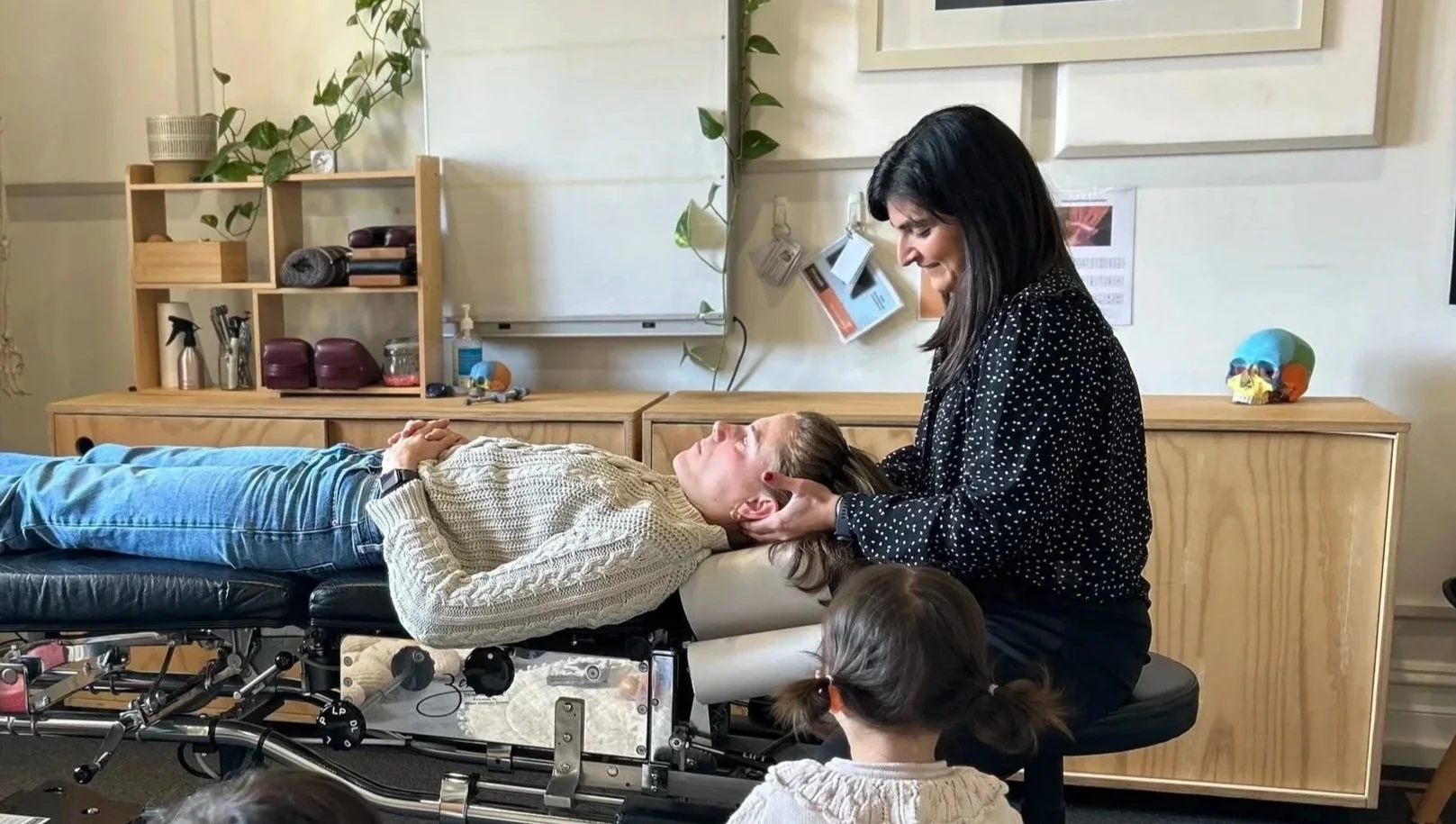
Frequently asked questions.
Lower Back Pain FAQ
1. What causes lower back pain?
Lower back pain can be caused by muscle strain, joint irritation, disc changes, posture overload, prolonged sitting, pregnancy-related changes, or repetitive lifting. In many people, it’s a combination of mechanical stress and deconditioning (1).
2. How common is lower back pain?
Lower back pain is one of the most common health complaints worldwide and is the leading cause of disability globally (2).
3. Can chiropractic care help lower back pain?
Chiropractic care may assist with pain, stiffness, mobility, and functional movement patterns by improving joint motion, reducing muscular tension, and supporting nervous system function (3).
4. When should I see a chiropractor for lower back pain?
If your pain lasts more than a few days, keeps returning, radiates into the legs, affects movement or sleep, or came on after an injury, seeing a chiropractor for an assessment is appropriate (4).
5. What does a chiropractic assessment involve?
Your chiropractor will take a full history, assess posture and movement, check spinal and pelvic alignment, perform orthopaedic and neurological tests, and create a personalised plan (5).
6. Is chiropractic care safe for lower back pain?
Research shows chiropractic care is generally considered safe when performed by a trained, registered practitioner, with adverse events being rare and typically mild (6).
7. Can poor posture cause lower back pain?
Yes — prolonged sitting, tech posture, weak core muscles, and uneven loading of the spine can increase mechanical stress and contribute to lower back pain (7).
8. Could my lower back pain be coming from my hips or pelvis?
Absolutely. Pelvic asymmetry, sacroiliac joint dysfunction, hip mobility restrictions, and pregnancy-related changes can all create referred or compensatory pain in the lower back (8).
9. Can chiropractic care help disc-related lower back pain?
Some people with disc-related lower back pain experience improvements in mobility, pain, and overall function through gentle manual therapy and movement rehabilitation (9).
10. What are the best home exercises for lower back pain?
Gentle mobility work (cat-cow, pelvic tilts), core activation, hip flexor stretches, glute strengthening, and walking are all commonly recommended for most types of mechanical lower back pain (10).
11. Can stress or nervous system overload cause lower back pain?
Yes — stress increases muscle tension, affects breathing patterns, and sensitises pain pathways, contributing to persistent or recurring lower back symptoms (11).
12. Should I use heat or ice for lower back pain?
Ice may help reduce acute irritation; heat may help relax muscles and improve mobility. Many people benefit from alternating both depending on symptoms (12).
13. Does pregnancy increase the risk of lower back pain?
Yes — hormonal changes, ligament laxity, altered centre of gravity, and pelvic shifts commonly contribute to lower back and pelvic pain during pregnancy (13).
14. Can chiropractic help prevent recurring lower back pain?
Evidence shows that ongoing movement, strengthening, ergonomic habits, and periodic spinal care may help reduce the recurrence of mechanical lower back pain (14).
15. When is lower back pain an emergency?
Seek urgent medical attention if you experience: loss of bowel/bladder control, saddle numbness, progressive weakness, severe trauma, or fever with back pain (15).
-
The information provided in this Lower Back Pain FAQ is for general educational purposes only and is not intended to diagnose, treat, cure, or prevent any health condition. Chiropractic care focuses on improving movement, function, and overall wellbeing, and individual results may vary. The content does not replace personalised health advice, nor does it make claims about specific outcomes for lower back pain or any related symptoms.
If you have questions about your health, experience new or worsening symptoms, or are unsure whether chiropractic care is right for you, please consult a qualified healthcare professional.
-
Hartvigsen J, et al. Lancet. 2018.
Global Burden of Disease Study. Lancet. 2020.
Paige NM, et al. JAMA. 2017.
Chou R, et al. Ann Intern Med. 2017.
Australian Chiropractors Association Clinical Guidelines.
Rubinstein SM, et al. BMJ. 2019.
Lis AM, et al. Manual Therapy. 2007.
Vleeming A, et al. Spine. 2012.
Oliveira CB, et al. BMJ. 2018.
Qaseem A, et al. Ann Intern Med. 2017.
Bair MJ, et al. Psychosom Med. 2017.
Nadler SF, et al. Clin J Pain. 2004.
Wu WH, et al. Spine. 2004.
Hayden JA, et al. BMJ. 2021.
National Institute for Health and Care Excellence Guidelines.
Neck Pain FAQ
1. What causes neck pain?
Neck pain is commonly caused by poor posture, prolonged device use, stress-related muscle tension, joint irritation, whiplash, sports strain, or sleeping awkwardly. Less common causes include disc injuries and nerve irritation. A chiropractor can assess the underlying mechanical contributors and recommend safe, appropriate care.¹⁻³
2. How can chiropractic care help with neck pain?
Chiropractic care focuses on improving joint mobility, reducing muscular tension, and supporting healthy posture. Techniques may include gentle adjustments, mobilisations, muscle release, advice on ergonomics, and rehab exercises tailored to your presentation.²⁻⁴
3. Is chiropractic treatment for neck pain safe?
Yes. Current research shows that chiropractic care, when provided by a trained and registered practitioner, is considered safe and appropriate for many people with mechanical neck pain. Your chiropractor will assess risks and modify techniques as needed.³⁻⁵
4. Why does posture affect neck pain?
Forward-head posture and rounded shoulders place extra pressure on the cervical spine, leading to muscle fatigue, joint stress, and nerve irritation. Correcting posture can significantly reduce symptoms.⁶
5. Can neck pain cause headaches?
Yes. Irritated neck joints and tight muscles (especially suboccipitals) can refer pain to the head, contributing to tension-type headaches or cervicogenic headaches.²⁻⁴
6. Should I see a chiropractor for tech-neck?
Absolutely—tech-neck is one of the most common reasons adults seek care. A chiropractor can restore mobility, reduce tension, and guide you through ergonomic and home-care strategies to break the pattern.⁶
7. Can stress contribute to neck pain?
Yes. Stress activates the sympathetic nervous system and increases muscle tension, especially in the neck and shoulders. Chiropractic care, along with breathwork and movement, can support better regulation.⁷⁻⁸
8. When should I worry about neck pain?
Seek immediate medical attention if you experience trauma, severe or worsening neurological symptoms, unexplained fever, significant weakness, or if pain persists despite conservative care. Your chiropractor will screen for red flags at your appointment.⁴⁻⁵
9. What is the difference between neck stiffness and a locked neck?
Neck stiffness generally develops gradually from posture or tension. A “locked” neck (acute wry neck) often appears suddenly and may involve joint irritation or muscle spasm and can be associated with post viral. Chiropractic care can help restore movement safely and progressively.³
10. Can chiropractic help with whiplash?
Yes. Research supports manual therapy, mobilisation, soft-tissue work, and exercise as conservative options for many whiplash-associated disorders. Chiropractic care may assist, depending on severity and stage of recovery. Your practitioner will assess first.⁴⁻⁹
11. How long does it take to feel better?
Most people notice improvement within a few sessions, but timeframes vary depending on severity, lifestyle factors, and how long the issue has been present. Movement, ergonomic changes, and home-care exercises enhance outcomes.²
12. Do chiropractors use gentle techniques for neck pain?
Yes. At Nomad Chiropractic, we tailor care to your comfort level. Techniques range from manual adjustments where safe, very gentle mobilisations and cranial work to soft-tissue release and low-force adjusting methods.
13. Can neck pain be prevented?
Yes—regular movement, an ergonomic workspace, strengthening exercises, reduced device use, good pillow support, and routine check-ins with a chiropractor can all help reduce recurrence.⁶
14. Is neck pain common during pregnancy or postpartum?
Very. Hormonal changes, altered posture, feeding positions, and carrying babies often strain the neck. Gentle pregnancy-safe and postpartum-specific chiropractic techniques can help reduce tension and improve comfort.⁷
15. What should I expect at my first chiropractic appointment?
Your Mosman neck pain experts will spend about 45mins with you: going through a thorough history, posture review, orthopaedic and neurological testing, and a clear explanation of findings. Your chiropractor at Nomad Chiropractic on Sydney’s North Shore will provide an individualised plan based on your goals and safety considerations.
-
The information in this Neck Pain FAQ is general and is not intended to imply that chiropractic care can directly treat or cure neck pain or any specific condition. Responses describe common presentations seen in clinical practice and general wellness approaches only.
Every person’s situation is different, and outcomes vary. This content should not replace individual medical advice, diagnosis, or treatment. If you are experiencing neck pain, neurological symptoms, recent trauma, or have concerns about your health, please consult a qualified healthcare professional for personalised guidance.
No therapeutic claims are made.
-
Cohen SP. Epidemiology, diagnosis, and treatment of neck pain. Mayo Clin Proc. 2015.
Blanpied PR et al. Neck Pain Clinical Practice Guidelines. J Orthop Sports Phys Ther. 2017.
Hurwitz EL et al. Treatment of neck pain: Non-invasive interventions. Eur Spine J. 2008.
Bussières AE et al. Spinal manipulative therapy and other conservative treatments for neck pain. J Manipulative Physiol Ther. 2016.
Cassidy JD et al. Risk of vertebrobasilar stroke and chiropractic care. Spine. 2008.
Cuéllar JM et al. "The Impact of Computer Use on Neck Pain." Ergonomics. 2021.
McEwen BS. Stress effects on the body. Ann N Y Acad Sci. 2008.
Weerapong P et al. Mechanisms of manual therapy. Sports Med. 2005.
Côté P et al. The burden and management of whiplash-associated disorders. Lancet. 2021.