
Back to School & Retained Primitive Reflexes
Paediatric & Primitive Reflex Chiropractors in Mosman, Sydney — Supporting Growing Nervous Systems
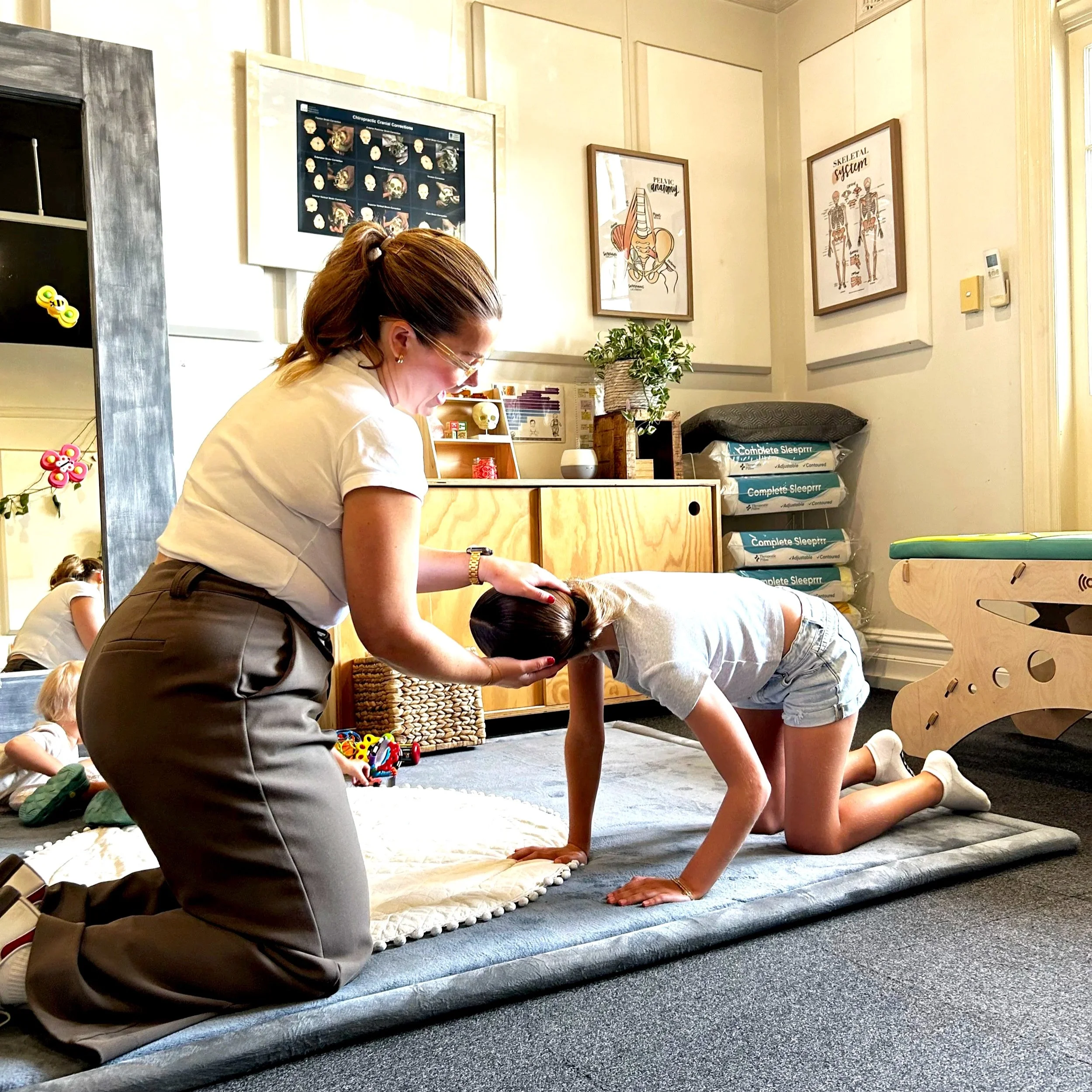
How to Spot the Signs, Support Integration at Home, and Why Chiropractic Care Makes a Difference
As the school year approaches, many parents notice a familiar mix of excitement and concern. New teachers, new routines, higher academic demands—and sometimes new challenges with focus, coordination, emotions, or behaviour.
At Nomad Chiropractic, we often see an increase in families booking appointments just before term starts, asking the same question:
“My child is smart and capable—so why does school feel so hard for them?”
One often-overlooked piece of the puzzle is retained primitive reflexes.
These early-life reflexes are essential for survival and brain development in infancy—but when they don’t fully integrate, they can quietly interfere with learning, behaviour, posture, and emotional regulation throughout the school years.
This blog will help you understand:
What retained primitive reflexes are
Signs they may still be active in school-aged children
Practical movement strategies you can start before school goes back
How chiropractic care—including gentle adjustments and red laser—can accelerate neurological integration
What Are Primitive Reflexes?
Primitive reflexes are automatic movement patterns present at birth (and even before). They originate in the brainstem and help babies:
Survive birth
Feed
Breathe
Develop early motor patterns
Examples include:
Moro (startle) reflex
Asymmetrical Tonic Neck Reflex (ATNR)
Symmetrical Tonic Neck Reflex (STNR)
Tonic Labyrinthine Reflex (TLR)
Palmar and plantar grasp reflexes
As a child grows, these reflexes should naturally integrate (switch off) as higher brain centres mature—making way for voluntary movement, coordination, emotional regulation, and learning.
When integration doesn’t fully occur, the reflex remains “on in the background,” subtly pulling the nervous system into immature patterns.
Why Retained Primitive Reflexes Matter at School
School demands skills that rely on higher-level brain function:
Sitting upright
Crossing midline
Sustained attention
Emotional regulation
Reading, writing, and eye tracking
Coordination between left and right brain hemispheres
If primitive reflexes remain active, the nervous system is forced to multitask—managing both survival reflexes and learning. This can make school feel exhausting, frustrating, or overwhelming for a child.
Importantly, this is not a motivation issue or behavioural flaw—it’s neurological immaturity.
Signs Primitive Reflexes May Still Be Active
Every child is different, but common signs we see—especially during the school years—include:
Learning & Focus
Difficulty concentrating or sitting still
Poor attention span or daydreaming
Trouble copying from the board
Reading fatigue, skipping words, or losing place
Emotional & Behavioural Signs
Big emotional reactions to small triggers
Anxiety around school or separation
Low frustration tolerance
Fight/flight responses under pressure
Posture & Movement
Slouching at desk or “W-sitting”
Poor balance or coordination
Toe walking or awkward running style
Frequent tripping or clumsiness
Writing & Fine Motor Skills
Tight pencil grip
Hand fatigue when writing
Messy handwriting despite effort
Avoidance of drawing or written tasks
Sensory Challenges
Sensitivity to noise, light, clothing, or touch
Motion sickness
Avoidance of playground equipment
If several of these resonate, retained reflexes may be contributing—even if your child is otherwise bright and capable.
Why Back-to-School Is the Perfect Time to Address Reflexes
The weeks before school starts are a neurological window of opportunity:
Less academic pressure
More flexibility for movement and play
Reduced stress on the nervous system
By supporting reflex integration before term begins, children often start school:
Calmer
More regulated
Better able to sit, focus, and learn
With greater confidence in their bodies
This proactive approach can dramatically change how the school year unfolds.
Movement Strategies to Support Reflex Integration at Home
While professional care is important, daily movement input is essential for integration. The brain learns through repetition, rhythm, and patterning.
Here are general, safe strategies you can begin at home:
1. Cross-Crawl Movements
Crossing the midline helps integrate ATNR and improve left–right brain communication.
Marching while touching opposite knee and hand
Bear crawls
Crawling games through tunnels
Tip: Slow and controlled beats fast and sloppy.
2. Crawling (Yes—even for older kids)
Crawling is one of the most neurologically powerful movements for reflex integration.
Forward crawl
Backward crawl
Obstacle courses on hands and knees
Just 3–5 minutes daily can make a noticeable difference.
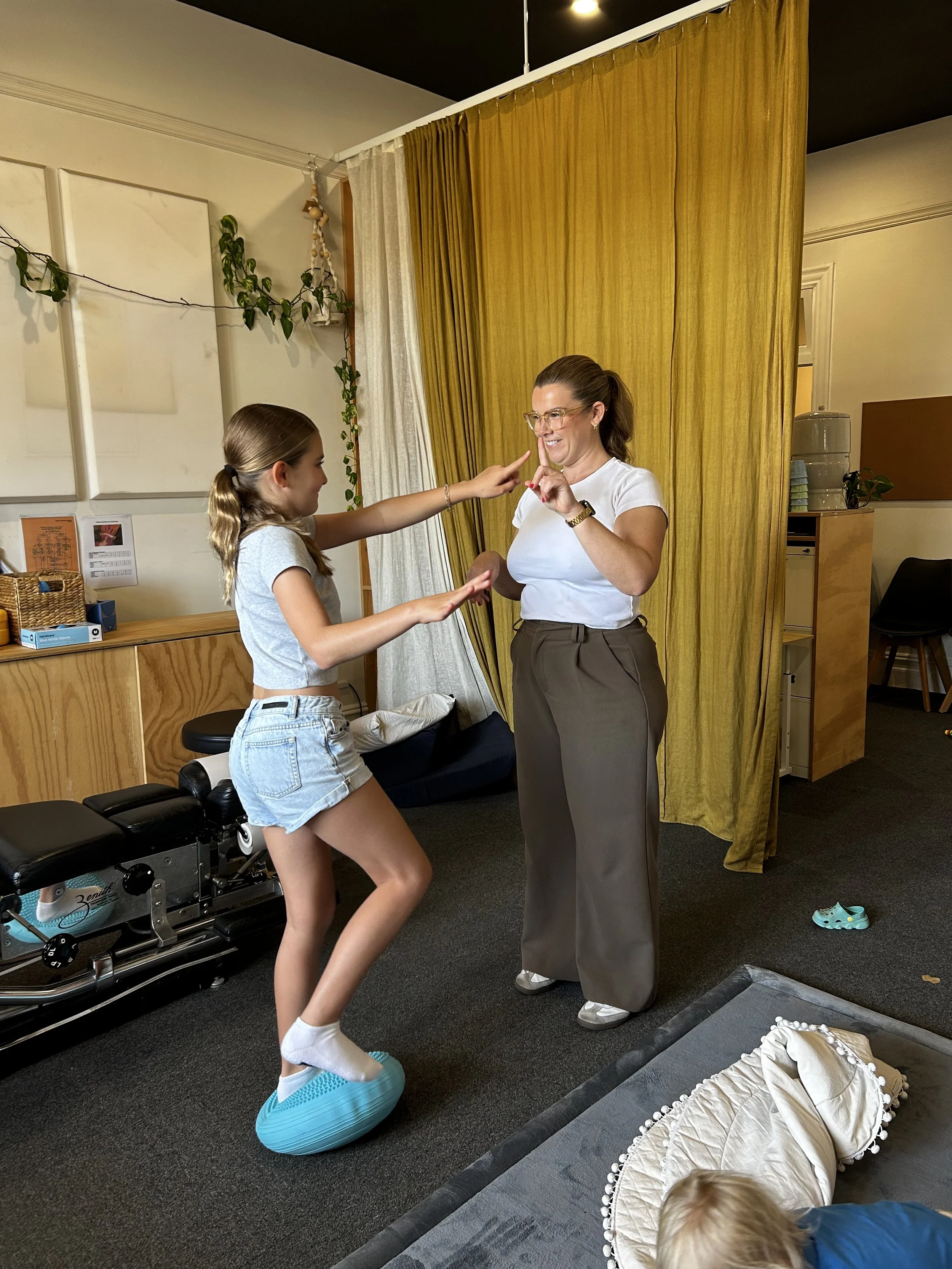
3. Balance & Vestibular Input
Supports TLR and overall postural control.
Standing on one leg
Balance boards or cushions
Slow spinning followed by grounding movements
Always follow vestibular play with calm pressure or rest.
4. Wall Pushes & Isometric Holds
Helps regulate the nervous system and reduce Moro activation.
Wall push-ups
Planks
Chair push-downs
These provide strong proprioceptive input—calming and organising for the brain.
5. Rhythmic Movement
The nervous system loves rhythm.
Rocking on hands and knees
Gentle rolling
Skipping or hopping to a beat
Consistency matters more than complexity.
Why Movement Alone Isn’t Always Enough
While home exercises are powerful, some children plateau. This is often because spinal and neurological interference is preventing the brain from fully receiving and integrating movement input.
This is where chiropractic care becomes a game-changer.
How Chiropractic Care Supports Reflex Integration
At Nomad Chiropractic, our approach is gentle, neurological, and age-appropriate.
1. Nervous System-Centred Chiropractic Adjustments
Gentle chiropractic adjustments help:
Reduce interference in the spine and nervous system
Improve communication between brain and body
Support maturation of higher brain centres
When the nervous system is regulated, reflexes are far more likely to integrate successfully.
2. Red Laser Therapy (Low-Level Laser)
We also use red laser therapy as part of our reflex integration approach.
Red laser:
Stimulates neurological pathways
Enhances cellular energy (ATP production)
Supports brainstem and cortical communication
Accelerates integration when paired with movement
This is not a passive fix—it amplifies the brain’s ability to respond to therapy and movement.
Parents often notice:
Faster progress
Improved emotional regulation
Better focus and body awareness
3. Targeted Reflex Assessments
Rather than guessing, we assess which reflexes are active and how they’re affecting your child’s function—then tailor care accordingly.
This precision approach avoids overwhelm and ensures therapy is purposeful.
Real-World Changes Parents Often Notice
When reflexes begin integrating, parents frequently report:
Improved posture at desk
Easier mornings and transitions
Less emotional volatility
Improved handwriting endurance
Increased confidence and independence
These changes don’t just help at school—they ripple into home life, sport, and social relationships.
Supporting Your Child’s Nervous System Is a Gift for Life
Addressing retained primitive reflexes isn’t about “fixing” a child—it’s about removing neurological roadblocks so they can access their full potential.
As academic expectations increase each year, a well-regulated nervous system becomes one of the most valuable foundations you can give your child.
How Nomad Chiropractic Can Help
At Nomad Chiropractic Mosman, we support:
School readiness
Learning and behavioural challenges
Retained primitive reflex integration
Nervous system regulation for kids of all ages
Our care combines:
Gentle chiropractic adjustments
Neurological assessments
Red laser therapy
Home-based movement guidance
All delivered in a calm, supportive, family-centred environment.
Thinking Ahead for This School Year?
If you’ve noticed signs that your child is working harder than they should just to cope with school, now is the perfect time to act—before patterns become entrenched.
A regulated nervous system doesn’t just make school easier.
It makes childhood lighter, learning smoother, and confidence stronger.
Why Parents Choose Nomad Chiropractic for Their Children
Choosing care for your child is deeply personal.
Parents don’t come to Nomad Chiropractic Mosman looking for quick fixes — they come looking for understanding, safety, and support for their child’s nervous system.
Here’s what sets our care apart.
🧠 A Nervous System–First Approach
Children’s challenges with learning, focus, posture, emotions, or movement are often neurological — not behavioural.
Our care focuses on:
How the brain and body communicate
Nervous system regulation
Developmental foundations that support learning and growth
We look beyond symptoms to understand why your child may be struggling.
👶 Specialist Paediatric & Primitive Reflex Experience
We have advanced training in:
Paediatric chiropractic care
Retained primitive reflex (RPR) integration
Developmental movement patterns
This means we recognise subtle neurological signs that are often missed — especially in bright, capable children who are working harder than they should.
✋ Gentle, Child-Appropriate Care
Our adjustments are:
Gentle
Age-appropriate
Tailored to your child’s size, stage, and comfort
There is no “one-size-fits-all” approach. Every child’s nervous system is different, and their care reflects that.
🔦 Red Laser Therapy to Support Neurological Change
We integrate low-level red laser therapy to support:
Neurological communication
Reflex integration
Cellular energy and healing
Used alongside movement and chiropractic care, it helps the nervous system respond more efficiently — especially for children who plateau with exercises alone.
🏫 School Readiness & Learning Support
Many families come to us because school feels harder than expected.
We commonly support children with:
Focus and attention challenges
Emotional regulation and anxiety
Poor posture or classroom fatigue
Coordination, balance, and movement difficulties
Our goal is to help learning feel easier — not more effortful.
🏡 Practical Support for Home
Parents value that we don’t just treat in-clinic.
We provide:
Simple movement strategies
Clear explanations (no jargon)
Guidance that fits into real family life
You’ll always understand why something is recommended and how to support your child at home.
💛 A Calm, Child-Safe Environment
Children regulate best when they feel safe.
Our clinic is:
Welcoming and calm
Designed with children in mind
A place where kids feel heard, not rushed
Parents often tell us their child feels more relaxed the moment they walk in.
📍 Trusted by Mosman & North Shore Families
As a local Mosman clinic, we’re proud to support families from:
Mosman
Neutral Bay
Cremorne
North Sydney
Cammeray
Willoughby
Sydney’s Lower North Shore
Manly & Sydney’s Lower Northern Beaches
Many families come to us through word-of-mouth — the strongest sign of trust.
🌱 Supporting Children, Not Labeling Them
Above all, parents choose Nomad Chiropractic because we see the child, not the label.
We don’t pathologise.
We don’t rush.
We support the nervous system so your child can grow, learn, and thrive in their own time.
How Chiropractic Care Can Support Primitive Reflex Integration
Primitive reflexes are controlled by the nervous system, so supporting how the brain and body communicate is key to integration.
Gentle paediatric chiropractic care focuses on reducing interference in the nervous system, particularly along the spine where messages travel between the brain and body. When this communication improves, the nervous system is better able to mature and move out of early reflex-driven patterns.
At Nomad Chiropractic Mosman, care may include age-appropriate chiropractic adjustments to support regulation, posture, and coordination. We often combine this with movement-based strategies and low-level red laser therapy, which helps stimulate neurological pathways and support cellular energy involved in brain function.
When the nervous system is more regulated, many children find it easier to sit, focus, coordinate movement, and manage sensory input. Chiropractic care doesn’t “force” reflexes to switch off — it supports the body’s natural ability to develop and integrate, creating a stronger foundation for learning, growth, and confidence.
Homecare Movement Tips
We have a lot of homecare tips on our website here. But before you start doing every exercise under the sun we recommend getting checked and adjusted because some may integrate without the need of an extensive home-care regime with chiropractic care.
📲 FOLLOW SANDY ON SOCIALS! She gives heaps of Homecare intentional movement tips.
👉[Facebook]
👉[Instagram]
Paediatric & Retained Primitive Reflex Chiropractic FAQ
-
Retained primitive reflexes are early movement patterns that should naturally integrate as a child’s nervous system matures. When they remain active, they can interfere with focus, posture, coordination, emotional regulation, and learning. Many school-aged children with retained reflexes are intelligent but work much harder than expected to sit still, concentrate, read, or write.
-
Common signs include poor attention, anxiety, sensory sensitivities, clumsiness, messy handwriting, difficulty crossing the midline, posture issues, emotional outbursts, or fatigue during school tasks. These signs are often neurological rather than behavioural and may become more noticeable when school demands increase.
-
Yes. Chiropractic care focuses on supporting nervous system function and brain–body communication. Gentle, paediatric-specific chiropractic adjustments may help reduce interference in the nervous system, allowing the brain to better respond to movement and developmental input. When combined with targeted movement strategies, this can support the nervous system’s natural maturation process.
-
Low-level red laser therapy is a non-invasive technique used to support neurological pathways and cellular energy involved in nervous system function. When used alongside chiropractic care and movement-based strategies, red laser therapy may help enhance the nervous system’s responsiveness and support reflex integration, particularly in children who plateau with exercises alone.
-
The earlier the better. It all depends on when you notice, or your mothers intuition tells you something is off. Often parent’s seek help when retained primitive reflexes begin impacting learning, behaviour, posture, or emotional regulation — often at the start of the school year. Early nervous system support may help children adapt more comfortably to classroom demands and reduce long-term challenges associated with learning and coordination.
Want to learn more? Book a FREE 15min discovery call with one of our North Shore Paediatric & Retained Primitive Reflex Chiropractors today: Book HERE
-
Goddard Blythe, S. (2005). Reflexes, Learning and Behavior. Fern Ridge Press.
McPhillips, M., & Jordan-Black, J. (2007). Primary reflex persistence and reading difficulties. Dyslexia, 13(4), 316–338.
Melillo, R. (2009). Disconnected Kids. Penguin Group.
Taylor, M. et al. (2004). The effects of primitive reflex persistence on motor development. Journal of Child Neurology.
Haavik, H. (2014). The Reality Check: A Quest to Understand Chiropractic.
Pellow, J. et al. (2018). Low-level laser therapy and neurological modulation. Journal of Photomedicine and Laser Surgery.
-
The information provided by Nomad Chiropractic is intended for general educational purposes only and is not a substitute for professional medical advice, diagnosis, or treatment.
Chiropractic care, movement strategies, and nervous system–based approaches aim to support overall function and wellbeing. They do not diagnose or treat medical conditions, learning disorders, behavioural conditions, or developmental diagnoses.
Every child is unique, and responses to care may vary. Any concerns regarding your child’s health, development, learning, or behaviour should be discussed with a qualified healthcare professional. Always seek advice from your GP, paediatrician, or other appropriately registered health practitioner regarding specific medical concerns.
This content does not replace individual assessment or care. Decisions about your child’s health should be made in consultation with qualified professionals familiar with your child’s individual needs.