
What Actually Happens at a Baby Chiropractic Appointment?
Gentle care, baby-led sessions, and what to expect on your first visit
Booking your baby in for a chiropractic appointment can feel like a big step — especially if you’ve never seen a chiropractor yourself. You might be wondering:
• Will it be safe?
• Will my baby cry?
• Is this going to help?
At Nomad Chiropractic, we believe the first visit should feel like a breath out. Our goal is to support your baby in the most gentle and neurologically respectful way possible — with no rush, no force, and no rigid expectations.
Let’s walk you through what actually happens when you bring your little one in.
Step 1: Listening to the Whole Story
We begin with a full conversation about:
• Your pregnancy and birth experience
• Your baby’s feeding, sleeping, and digestion patterns
• Any tension, behaviours, or preferences you’ve noticed
• How your baby moves, settles, and connects
We don’t just listen to the symptoms — we listen to you. The goal is to understand the full picture of your baby’s nervous system and physical development.
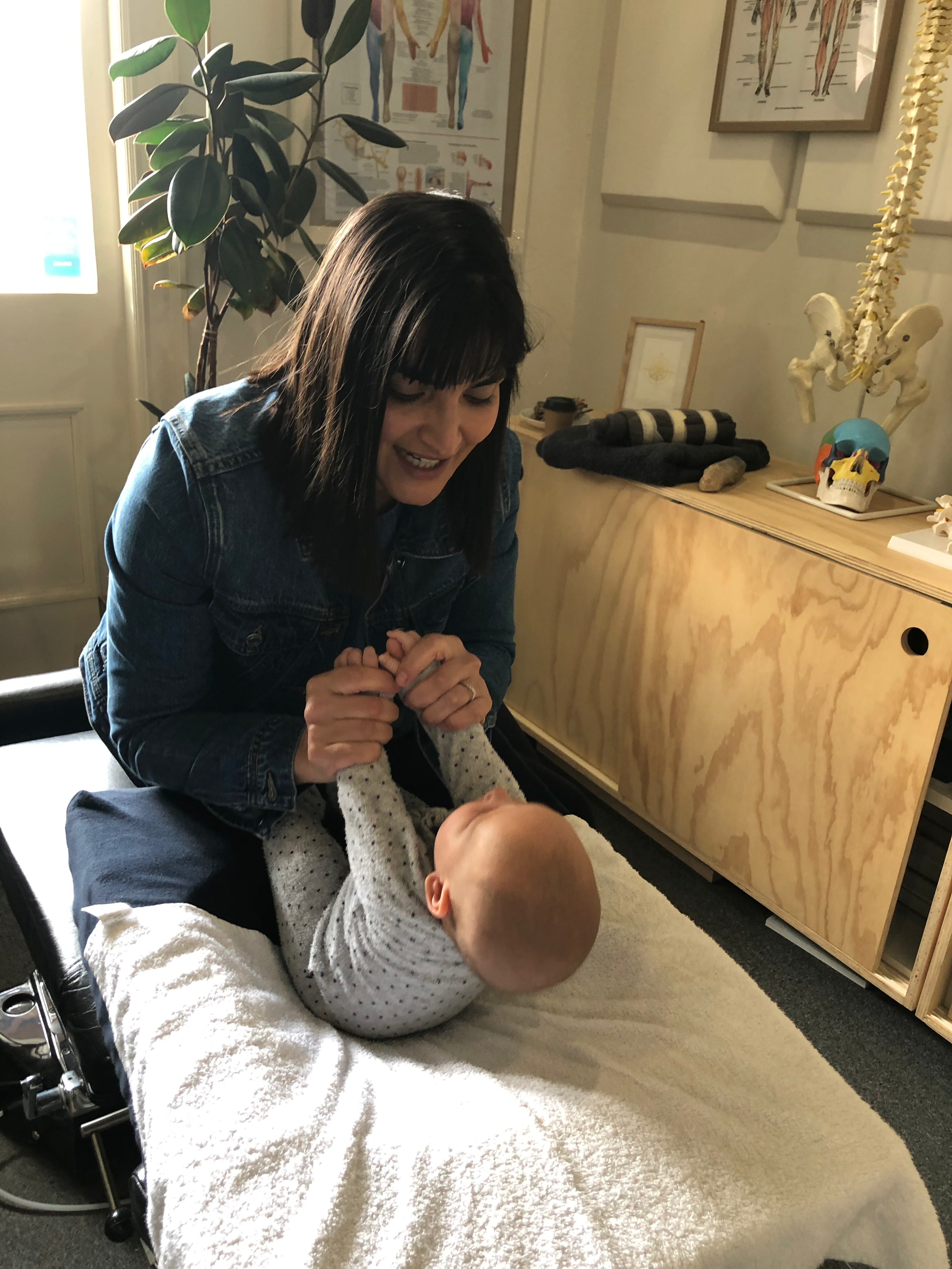
Step 2: Observing Baby’s Tone and Movement
We observe your baby in a relaxed state — ideally lying on you or on a soft surface. We’re looking at:
• Posture and symmetry
• Head position and turning
• Hip, neck, and spinal mobility
• Primitive reflexes and tone
• Facial tension and cranial shape
• Eye tracking and visual engagement
This isn’t a test they “pass or fail.” It’s a gentle, thorough way to understand how your baby is adapting to life outside the womb.
Research shows that early assessment of musculoskeletal and neurological tone can help identify functional issues before they become developmental delays (Kavalaris et al., 2021).
Step 3: Gentle, Specific Care
If chiropractic care is indicated, we may proceed with:
• Light cranial work — using finger-tip pressure to release dural or suture tension
• Sustained holds — on the sacrum, occiput, or spine to help release strain patterns
• Neurological reflex integration — gently supporting primitive reflex patterns
• Soft tissue balancing — particularly around the jaw, diaphragm, or shoulders
• Parent support — helping you reposition for feeding, carrying, or sleeping
It’s common for babies to sleep through their adjustment, or feed while we gently work. There is no cracking or quick thrusting involved.
How long does it take?
Initial appointments are typically 45–60 minutes. The second appointment is shorter (around 30 minutes), and ongoing follow ups are 15-30mins) but always baby-led. If your child needs to feed, cry, be held, or resettle — we follow their rhythm.
What are we actually adjusting?
We’re not adjusting bones — we’re supporting the nervous system and soft tissues that may be under strain.
Birth, even a smooth one, can create tension along the:
• Cranial membranes
• Upper cervical spine
• Sacrum and pelvis
• Shoulder girdle and diaphragm
If these areas are restricted, they can affect feeding, digestion, settling, and developmental movement. Chiropractic care works to gently restore balance and reduce stress.
Will I see changes straight away?
Sometimes yes — especially with feeding or sleep. Other times, it’s more subtle: better eye contact, less startle, deeper sleep, or easier transitions between feeds. Many parents describe their baby as “more relaxed in their body” or “happier lying flat.”
One study found that manual therapy improved latching in infants with musculoskeletal dysfunction compared to standard care (Miller et al., 2009). Another showed improved crying time in colicky infants after chiropractic care (Olafsdottir et al., 2001).
How often will we come?
There’s no cookie-cutter plan. We recommend care based on your baby’s needs, your goals, and how their body responds. Some babies benefit from a short burst of care. Others continue for longer as part of a developmental support plan.
We reassess constantly — and we’ll always check in with you about what’s working, what’s changing, and what your baby needs most.
The Nomad Difference as Sydney Baby Chiropractors
At Nomad, we:
• Create a calm, baby-led space — no bright lights or rushed appointments
• Use techniques like cranial work, SOT, and reflex integration
• See the whole family and encourage parental co-regulation
• Collaborate with your paediatrician, lactation consultant, or physio if needed
• Focus on function, not just symptoms
We’re here to listen, observe, support, and guide — never to pressure or pathologise.
References:
• Kavalaris, M. et al. (2021). Early manual therapy and neurological outcomes in infants: A scoping review. J Bodyw Mov Ther.
• Miller, J. E., et al. (2009). Contribution of chiropractic care to breastfeeding difficulties in newborns. J Manipulative Physiol Ther.
• Olafsdottir, E. et al. (2001). Randomised controlled trial of chiropractic treatment for infantile colic. Arch Dis Child.
FAQ
1. What should I bring to my baby’s chiropractic appointment?
It helps to bring your baby’s health history, favourite toy or comforter, and anything they might need for feeding or settling during the visit.
2. How long does a baby chiropractic appointment usually take?
The first visit often takes longer (30–45 minutes) for history, discussion, and assessment. Follow-up visits are usually shorter and tailored to your baby’s needs.
3. Will my baby need more than one appointment?
Every baby is unique. Some families notice changes quickly, while others choose ongoing care to support comfort and development. Your chiropractor will discuss recommendations with you.
4. Do I stay with my baby during the session?
Yes — parents are always encouraged to stay close. Many babies are held, cuddled, or even fed during their gentle chiropractic care.
5. How will my baby feel after their chiropractic appointment?
Some babies feed or sleep more easily after care, while others simply behave as usual. Responses vary, and care is always individualised.
Disclaimer
Chiropractic care does not claim to treat, cure, or prevent medical conditions. The information provided here is for educational purposes only and should not replace medical advice. Please consult your GP, paediatrician, or healthcare provider regarding medical concerns for your baby.