
How Red Laser Therapy Can Support Brain Balance in Children
Red laser therapy (also called photobiomodulation) is a gentle, non-invasive way to support a child’s nervous system. When one side of the brain is working harder than the other — a pattern often linked to emotional regulation challenges, sensory sensitivity, poor coordination, or retained primitive reflexes — red laser can help calm overactive areas and gently stimulate underactive ones. When combined with movement, chiropractic care, and simple home strategies, it can support better balance, focus, and regulation in growing children.
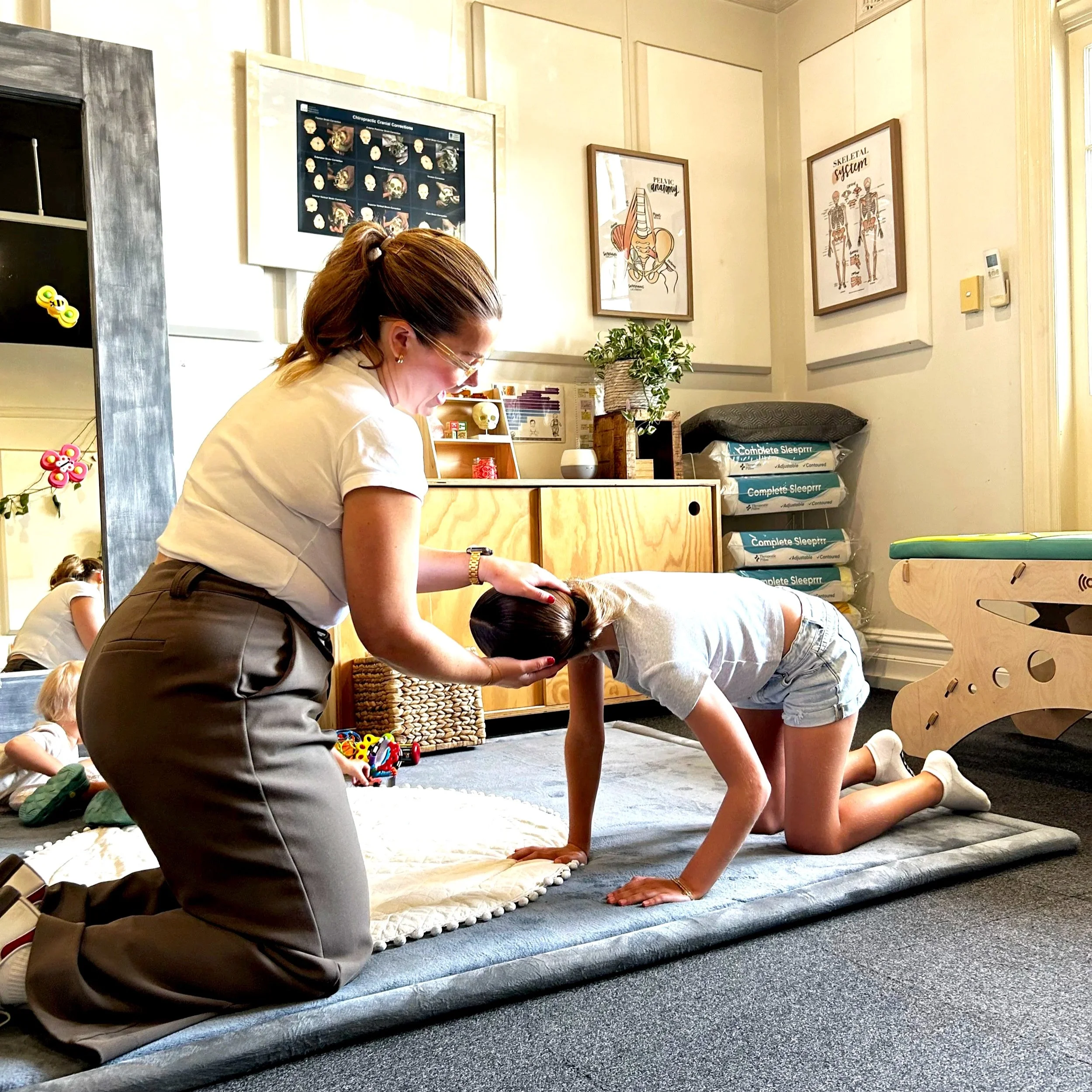
As parents, we often notice when something feels “a little off” with our child — even if we can’t quite put our finger on it.
Maybe your child:
Gets overwhelmed easily
Struggles with focus or emotional regulation
Seems clumsy or uncoordinated
Has difficulty with reading, writing, or sequencing
Can’t sit still but also tires quickly
Is sensitive to noise, clothing, or touch
These signs don’t mean anything is “wrong” with your child — but they may reflect how their nervous system is organising and processing information.
At Nomad Chiropractic, we look at development through a neurological lens. One concept we often explain to parents is brain balance — and how gentle tools like red laser therapy can help support it.
What Does “Brain Balance” Mean?
The brain has two hemispheres — left and right — that work together like a team.
In very simple terms:
The left side supports things like language, sequencing, focus, and fine motor planning
The right side plays a big role in emotional processing, body awareness, posture, and sensory input
In early development, both sides of the brain grow through movement, touch, and sensory experiences. Sometimes, however, one side becomes a little more dominant than the other.
When this happens, we may see:
Big emotions or anxiety
Poor coordination or posture
Learning challenges
Retained primitive reflexes
Sensory sensitivities
This is not a diagnosis — it’s simply a way of understanding how the nervous system may be adapting.
Where Does Red Laser Therapy Fit In?
Red laser therapy (also called photobiomodulation) uses low-level red or near-infrared light to gently support nervous system function.
Importantly:
It does not heat, cut, or damage tissue
It is painless and calming
Children usually don’t feel anything at all
The light works at a cellular level, supporting the tiny “energy factories” in cells (mitochondria). In the brain, this can help:
Improve blood flow and oxygen delivery
Support neural communication
Reduce inflammation
Encourage healthy neuroplasticity (the brain’s ability to adapt and learn)
Calming One Side, Supporting the Other
In some children, we see patterns where the right side of the brain is working very hard, while the left side is a little quieter.
This can look like:
Emotional overwhelm
Difficulty with attention or sequencing
Poor body awareness or coordination
In these cases, we may use red laser in very specific, gentle ways:
Brief applications to calm areas that are overactive
Slightly longer applications to support areas that need more input
This is not about “fixing” a child — it’s about helping their nervous system feel safe and balanced enough to grow.
What Does a Session Look Like?
For parents, one of the most reassuring parts is how simple this looks in practice.
A red laser session:
Takes only a few minutes
Is completely non-invasive
Can be done while your child sits on your lap
Often feels calming rather than stimulating
We always combine laser with:
Gentle chiropractic adjustments (age-appropriate and specific)
Movement or reflex-based activities
Regulation strategies to help the brain integrate the input
Laser is never a stand-alone treatment — it’s part of a bigger picture.
Easy Take-Home Ways Parents Can Help
You don’t need equipment at home to support brain balance. These simple strategies can make a big difference:
🟡 1. Encourage Cross-Body Movement
Activities that cross the midline help both sides of the brain communicate.
Crawling games
Climbing
Cross-crawl marching
Throwing and catching with alternating hands
🟡 2. Prioritise Rhythmic Movement
The brain loves rhythm.
Walking
Swimming
Skipping
Dancing to steady music
🟡 3. Reduce Sensory Overload
If a child’s nervous system is already working hard:
Limit background noise
Simplify routines
Offer predictable rhythms to the day
🟡 4. Support Calm Before Focus
Focus comes after regulation.
Deep belly breathing
Gentle pressure hugs
Quiet movement before schoolwork
🟡 5. Trust Developmental Timing
Progress is not linear. Nervous systems develop in layers, not straight lines.
Why We Combine Laser With Chiropractic Care
Chiropractic care helps ensure the brain is receiving clear, accurate information from the body, especially from the spine and joints.
When movement signals are clean and consistent:
The brain can organise more efficiently
Reflexes integrate more easily
Regulation improves
Laser therapy can help prime the nervous system — chiropractic and movement help it learn and integrate.
A Gentle Note for Parents
If you’re reading this and recognising your child, please know:
Your child is not broken
You didn’t miss something
Nervous systems are adaptable
With the right support, the brain can change — often beautifully.
Retained Primitive Reflexes (RPR) and Sensory-Sensitive Kids
Many of the children we see at Nomad Chiropractic are bright, curious, and capable — yet their nervous systems seem to work harder than they need to.
Often, this is linked to retained primitive reflexes and how the brain processes sensory information.
What Are Primitive Reflexes?
Primitive reflexes are automatic movement patterns we’re all born with.
They help babies:
Move through the birth process
Develop muscle tone
Learn early movement patterns like rolling, crawling, and standing
These reflexes are meant to integrate (switch off) as a child grows and their brain matures.
When they don’t fully integrate, the nervous system can stay in a more reactive state.
This is known as retained primitive reflexes (RPR).
How RPR Can Affect Sensory Processing
When reflexes remain active beyond infancy, they can interfere with how the brain filters and responds to sensory input.
Parents may notice:
Sensitivity to noise, light, clothing, or touch
Difficulty sitting still or staying focused
Big emotional reactions to small challenges
Poor balance or coordination
Fatigue after school or social situations
These children aren’t “too sensitive” — their nervous systems are simply working overtime.
With the right combination of care — including gentle chiropractic, movement, and supportive tools like red laser therapy — many children show meaningful improvements in comfort, confidence, and regulation over time.
Homecare Movement Tips
We have a lot of homecare tips on our website here. But before you start doing every exercise under the sun we recommend getting checked and adjusted because some may integrate without the need of an extensive home-care regime with chiropractic care.
📲 FOLLOW SANDY ON SOCIALS! She gives heaps of Homecare intentional movement tips.
👉[Facebook]
👉[Instagram]
FAQ: Red Laser Therapy
-
Yes. When used appropriately by trained professionals, low-level red laser therapy is considered very safe and non-invasive.
-
Most children feel nothing at all. Some feel calm or relaxed during or after sessions.
-
This depends on the child and their goals. Some notice changes quickly; others need consistent support over time.
-
No. Laser therapy works best when combined with movement, chiropractic care, and appropriate developmental support.
-
Laser does not “treat” learning or behaviour, but it may support the nervous system foundations that make learning and regulation easier.
If you’re curious whether red laser therapy and neurological chiropractic care could support your child, we’d love to help guide you.
At Nomad Chiropractic, we take the time to assess development, movement, and nervous system patterns — and create care plans that feel supportive, never overwhelming.
📍 Book a consultation or speak with our team to explore what support might look like for your child.
Want to learn more? Book a FREE 15min discovery call with one of our North Shore Paediatric & Retained Primitive Reflex Chiropractors today: Book HERE
Red laser therapy is a safe, gentle way to support brain balance and nervous system regulation in children. It works by calming overactive neural pathways and supporting underactive areas, helping improve emotional regulation, coordination, and developmental integration when combined with chiropractic care and movement.
-
Hamblin, M. R. (2019). Mechanisms and applications of the anti-inflammatory effects of photobiomodulation. AIMS Biophysics, 6(4), 337–361.
Salehpour, F., et al. (2020). Transcranial photobiomodulation therapy for brain disorders: A meta-analysis. Journal of Neurophotonics, 7(1), 011003.
Barrett, D. W., & Gonzalez-Lima, F. (2013). Transcranial infrared laser stimulation improves cognition. BBA Clinical, 1, 36–45.
Naeser, M. A., et al. (2011). Improved cognitive function following transcranial LED treatments. Photomedicine and Laser Surgery, 29(5), 351–358.
Melillo, R. (2016). Disconnected Kids. Penguin Random House.
-
The information provided by Nomad Chiropractic is intended for general educational purposes only and is not a substitute for professional medical advice, diagnosis, or treatment.
Chiropractic care, movement strategies, and nervous system–based approaches aim to support overall function and wellbeing. They do not diagnose or treat medical conditions, learning disorders, behavioural conditions, or developmental diagnoses.
Every child is unique, and responses to care may vary. Any concerns regarding your child’s health, development, learning, or behaviour should be discussed with a qualified healthcare professional. Always seek advice from your GP, paediatrician, or other appropriately registered health practitioner regarding specific medical concerns.
This content does not replace individual assessment or care. Decisions about your child’s health should be made in consultation with qualified professionals familiar with your child’s individual needs.