
Cervicogenic Headaches: When Your Neck Is the Culprit

Not all headaches start in your head.
Sometimes, they start in your neck—specifically, in the upper cervical spine. This lesser-known cause of chronic head pain is called a cervicogenic headache, and it's often misdiagnosed as a tension headache or migraine.
At Nomad Chiropractic Mosman, we see patients every week whose persistent, one-sided headaches are actually coming from restricted movement, poor posture, or past injuries in the neck. Once addressed, the results are often life-changing.
This blog explores what cervicogenic headaches are, how they differ from other types, and how chiropractic care helps address the root cause—not just mask the symptoms.
What Is a Cervicogenic Headache?
A cervicogenic headache (CGH) is a secondary headache, meaning it originates from a source outside the head—usually the upper cervical spine (C1–C3). The pain is referred to the head but is caused by dysfunction in the neck’s joints, muscles, or nerves.
Typical features of CGH:
One-sided (unilateral) pain
Starts in the neck and radiates to the front of the head, eye, or temple
Worse with neck movement or sustained posture (like desk work)
Often accompanied by neck stiffness or reduced motion
Not associated with visual aura or nausea (unlike migraines)
What causes cervicogenic headaches?
Poor posture (especially forward head posture)
Repetitive strain or desk work
Whiplash or past trauma
Muscle tension in the suboccipitals, traps, SCM
Cervical joint dysfunction (especially C1-C3)
The trigeminocervical complex in the brainstem processes sensory input from both the cervical spine and the trigeminal nerve (which supplies the face and head). So dysfunction in the neck can "trick" the brain into feeling pain in the head—even if the head itself is fine (Bogduk, 2001).
How Are Cervicogenic Headaches Different From Migraines or Tension Headaches?
Cervicogenic headaches are often confused with migraines or tension-type headaches, but they have some clear and important differences—especially once you understand where the pain starts and how it behaves.
Cervicogenic headaches are usually felt on just one side of the head.
The pain often starts at the base of the skull or in the neck and then radiates forward to the temple, behind the eye, or across the forehead. These headaches are typically worsened by neck movement or prolonged poor posture, like sitting at a desk for hours. Unlike migraines, cervicogenic headaches don’t usually come with sensitivity to light, nausea, or aura. They’re more mechanical in nature and tend to feel like a dull, deep ache that’s aggravated by specific movements or positions.
Migraines, on the other hand, may also be one-sided but are more commonly described as pulsing or throbbing in nature.
They often come with nausea, vomiting, light or sound sensitivity, and can last for hours or even days. Migraines aren’t typically brought on by neck movement or posture, and while they can co-exist with neck pain, they usually involve more neurological and hormonal triggers.
Tension-type headaches are generally bilateral, meaning they affect both sides of the head.
People often describe them as a tight band or pressure around the forehead or across the scalp. These headaches are commonly linked to emotional stress, eye strain, or muscular tension. They tend to be milder than migraines and don’t usually involve nausea or visual disturbances. Unlike cervicogenic headaches, they don't typically get worse with neck motion, though muscle tightness may play a role.
One of the best indicators that a headache is cervicogenic in origin is if it starts in the neck and is worsened by movement or pressure in that area. If turning your head, sitting with poor posture, or pressing on your upper cervical spine recreates or intensifies your headache, there's a strong chance your pain is coming from your neck—and chiropractic care may be exactly what you need.
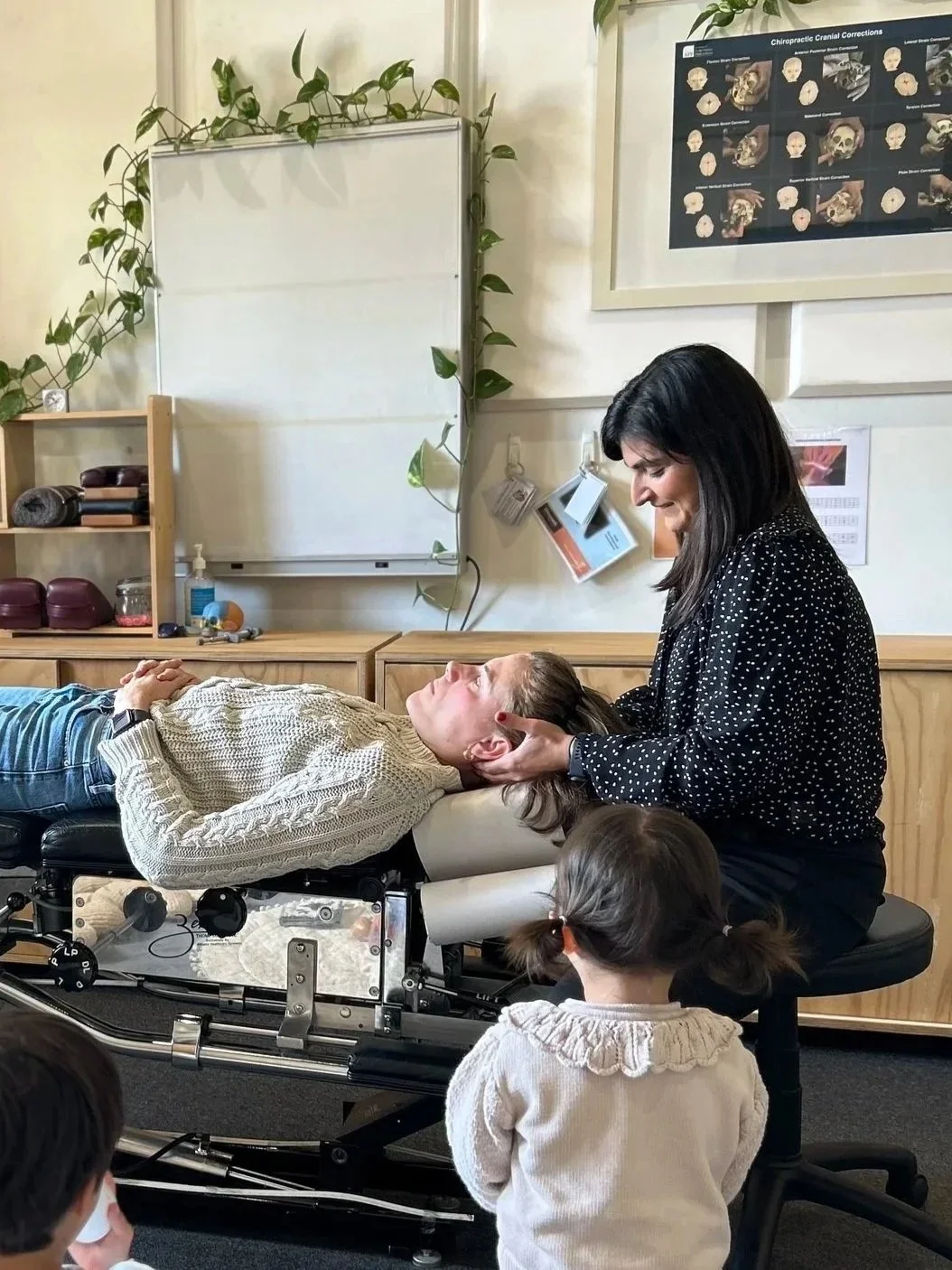
The Chiropractic Approach: Uncovering the Root Cause
Cervicogenic headaches aren’t just about head pain—they’re about mechanics, movement, and neurology.
At Nomad Chiropractic, we focus on:
Precise spinal adjustments to improve movement in the upper cervical joints
Neurological assessment to determine how your brain and body are adapting to stress
Postural retraining to correct forward head posture and muscle imbalances
Soft tissue therapy to release tension in the suboccipital, SCM, and trapezius muscles
Education and ergonomic support to prevent recurrence
We don’t just chase symptoms—we restore function, reduce irritation to the nervous system, and empower you with tools to feel better, longer.
What a Cervicogenic Headache Treatment Plan Looks Like
Each plan is individualised, but here’s a general breakdown of how we approach CGH at Nomad:
1. History + Assessment
Symptom history
Postural and spinal exam
Range of motion tests
Palpation of cervical and upper thoracic spine
Neurological screening
Nervous system scans (HRV, sEMG, thermal)
2. Adjustments
Specific, gentle adjustments to restricted upper cervical joints
Often using drop-piece, low-force, or diversified techniques
3. Soft Tissue Work
Targeted muscle release for:
Suboccipitals
Levator scapulae
Upper trapezius
Sternocleidomastoid (SCM)
4. Postural Rehab
Movement coaching for desk workers
Chin tuck exercises
Thoracic mobility and scapular retraction
5. Lifestyle Integration
Sleep support
Hydration and magnesium intake
Nervous system regulation (breathwork, HRV training)
Home Care Tips for Neck-Based Headaches
Desk Reset – Keep screens at eye level, shoulders back, chin in.
Chin Tucks – Gently pull your chin straight back (like a double chin) to counter forward head posture.
Neck Mobility – Try gentle neck rotations and side bends throughout the day.
Heat or Magnesium Spray – Relax tight muscles before bed.
Hydration – Cervical discs and muscles are hydration-sensitive.
Breathwork – Box breathing or vagus nerve activation can reduce tension.
Real Results: What the Research Says
In a landmark RCT, Jull et al. (2002) found manual therapy and exercises significantly reduced CGH intensity and frequency, with sustained results at 12 months.
A review by Watson & Drummond (2016) noted that upper cervical dysfunction is one of the most under-recognised causes of headache in clinical practice.
Chiropractic care was also shown to improve range of motion and reduce neck-related disability in patients with CGH (Bronfort et al., 2001).
The Nomad Difference for cervicogenic headaches
Our Mosman-based team takes a whole-body, nervous system-first approach to chronic headache care.
We support:
Desk workers with tech-neck
Teens in growth spurts
Parents under physical and emotional load
Post-whiplash and postnatal neck tension
Athletes with spinal imbalances
We’re not just here to crack and go—we educate, collaborate, and create lasting change.
Homecare Movement Tips
📲 FOLLOW SANDY ON SOCIALS! She gives heaps of Homecare intentional movement tips.
👉[Facebook]
👉[Instagram]
Nomad Chiropractic in the News!
Neighbourhood Media recently interviewed Sandy and Kristin about their holistic approach to headaches, migraines, TMJ & whole-body wellness with chiropractic care on Sydney’s Lower North Shore.
FAQ
-
A cervicogenic headache is head pain caused by dysfunction in the neck—usually in the upper cervical spine. It’s often one-sided and worsens with neck movement or poor posture.
-
Chiropractic care restores motion to restricted neck joints, relieves muscle tension, and calms irritated nerves that refer pain into the head. It’s a drug-free, long-term solution backed by research.
-
If your headache starts in the neck or base of the skull, worsens with movement or posture, and is on one side, it may be cervicogenic. A chiropractic assessment can confirm this.
-
Yes, they’re more common than most people think—especially in desk workers, post-injury patients, and those with poor posture or stress-related muscle tension.
-
Absolutely. Forward head posture and rounded shoulders place chronic stress on the cervical spine, which can lead to joint dysfunction and nerve irritation.
Want to learn more? Book a FREE 15min discovery call with one of our Sydney Headache Chiropractors today: Book HERE
-
Jull, G., Trott, P., Potter, H., Zito, G., Niere, K., Shirley, D., et al. (2002). A randomized controlled trial of exercise and manipulative therapy for cervicogenic headache. Spine, 27(17), 1835–1843.
Bogduk, N. (2001). Cervicogenic headache: anatomic basis and pathophysiologic mechanisms. Current Pain and Headache Reports.
Watson, D.H., Drummond, P.D. (2016). Head pain referral during examination of the neck in migraine and tension-type headache. Headache.
Bronfort G, Evans R, Anderson AV, et al. (2001). Spinal manipulation, medication, or home exercise with advice for neck pain: a randomized trial. Ann Intern Med.
Jull G., et al. (2002). Exercise and manipulative therapy for cervicogenic headache.Spine, 27(17): 1835–1843.
Knox R., Chapman C., Rosner A. (2011). The trigeminocervical complex and its role in headache disorders.Practical Neurology, 11(5): 285–288.
Okeson J.P. (2019). Management of Temporomandibular Disorders and Occlusion. 8th ed. Elsevier.
-
This blog post is for general informational and educational purposes only. It is not intended to diagnose, treat, cure, or prevent any medical condition, nor should it be considered individual health advice. Please consult with your healthcare provider, chiropractor, or medical professional before making any decisions about your health or starting any new care program. Chiropractic care and outcomes may vary depending on individual circumstances. At Nomad Chiropractic, we provide personalised care based on a full clinical assessment and your unique needs. If you are experiencing sudden, severe, or unusual headaches, seek immediate medical attention.