
The Jaw–Headache Connection: How TMJ Dysfunction Triggers Head Pain
Have you ever noticed your headaches seem to start at your jaw or temples — especially after a stressful day, a long work week, or a night of teeth clenching?
You’re not imagining it.
Your jaw and your head pain are deeply connected through one of the most powerful nerves in the body — the trigeminal nerve.
At Nomad Chiropractic Mosman, we see many patients who come in for “headaches” but actually have underlying TMJ dysfunction (temporomandibular joint issues). Once the jaw is assessed and supported, their headaches often ease dramatically.
Let’s explore how your jaw, spine, and nervous system all work together — and why chiropractic care can be such a game changer for jaw-related headaches.
Meet Your TMJ: Small Joint, Big Impact
The temporomandibular joint (TMJ) connects your jawbone (mandible) to your skull (temporal bone) — right in front of your ears. It’s one of the most complex joints in the body, responsible for talking, chewing, yawning, and even swallowing.
But it doesn’t work alone. The TMJ shares muscles, fascia, and nerve pathways with the neck, head, and cranial structures — meaning tension or dysfunction here can quickly ripple through to cause pain elsewhere.
The trigeminal nerve, which provides sensation to much of the face and head, runs right through this area. When the TMJ becomes tight, inflamed, or misaligned, it can irritate this nerve, leading to referred pain that presents as:
Tension headaches
Pain around the temples or behind the eyes
Ear pain or fullness without infection
Jaw clicking, popping, or locking
Neck and shoulder tightness
Even dizziness or facial pain
Common Causes of TMJ-Related Headaches
TMJ dysfunction (often called TMD) can stem from many sources — physical, emotional, or even postural.
Common triggers include:
Teeth clenching or grinding (bruxism) – often stress or sleep related
Poor posture – especially forward head posture that strains the jaw and upper neck
Neck misalignment or injury – trauma, whiplash, or upper cervical dysfunction
Dental work, orthodontics, or extractions – which can subtly alter jaw position
Chronic stress – leading to constant muscle tension in the jaw and face
When the TMJ isn’t moving smoothly, the surrounding muscles compensate, pulling on the skull and upper cervical spine — and setting off the perfect storm for recurring headaches.
The Chiropractic Connection: Aligning the Jaw, Neck, and Nervous System
Chiropractic care looks beyond the symptom — focusing on how your jaw, neck, and nervous system interact.
At Nomad Chiropractic, our approach is gentle, neurologically informed, and comprehensive. We assess the TMJ, cranial movement, cervical spine, and posture to understand how each is influencing your headache patterns.
Here’s how we help:
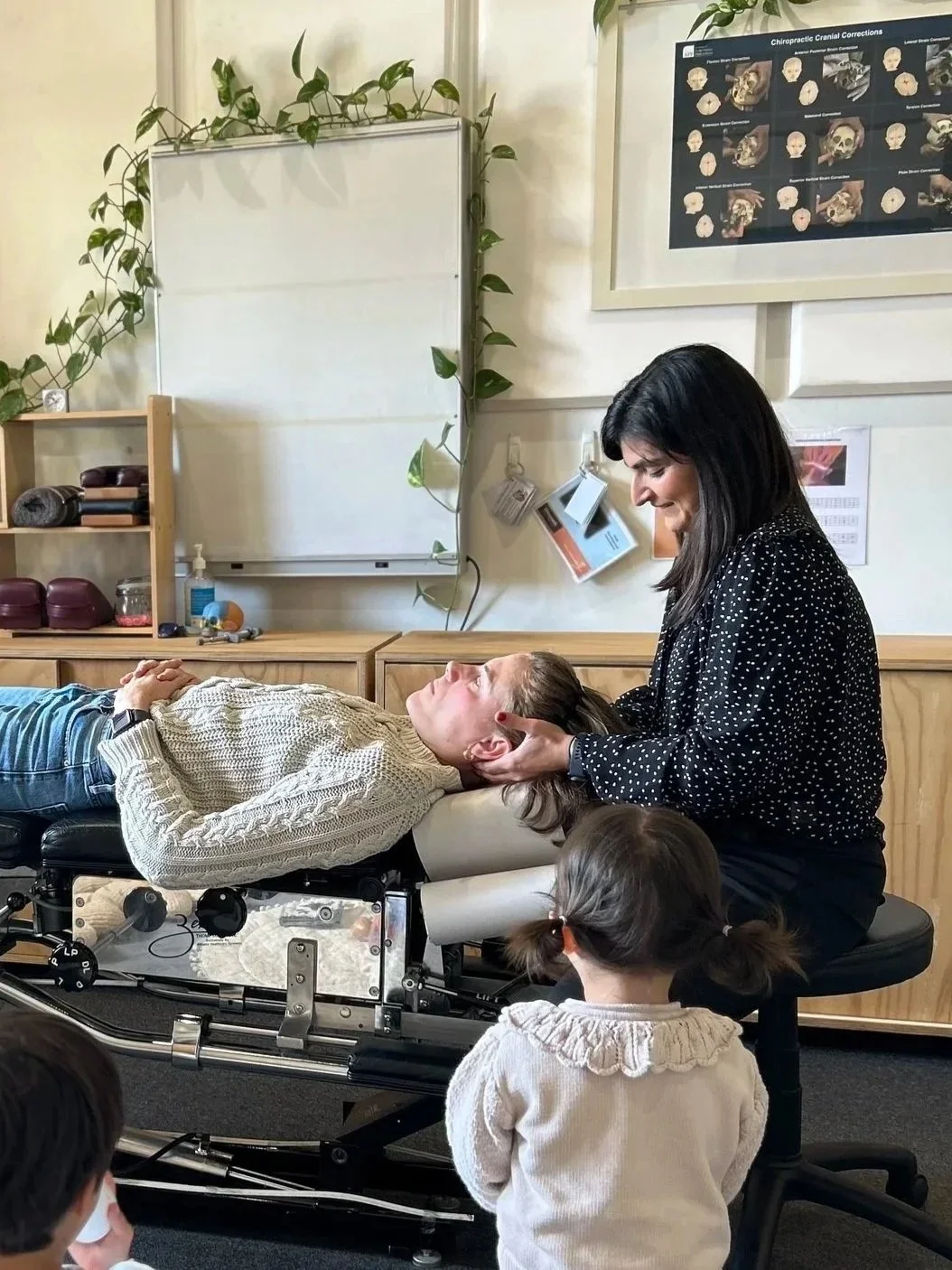
1. Jaw & Cranial Assessment
We assess the movement and symmetry of your jaw, bite, and cranial bones. TMJ misalignment can often be linked to subtle cranial tension — especially following dental work, birth trauma, or long-standing clenching.
2. Neck and Upper Cervical Adjustments
The upper neck (C1–C3) shares nerve pathways with the jaw and head. Chiropractic adjustments here can reduce referred pain, improve motion, and calm the trigeminocervical complex — a key player in headache generation (Knox et al., 2011).
3. Muscle & Soft Tissue Release
Targeting the masseter, temporalis, and pterygoid muscles helps release jaw tension, ease trigger points, and restore balance between sides.
4. Posture & Ergonomics
Forward head posture strains both the jaw and the upper neck. Correcting alignment through exercise, awareness, and workstation setup helps prevent recurring tension.
5. Nervous System Regulation
Stress amplifies TMJ tension. We support parasympathetic activation through gentle adjustments, breathwork, and home strategies to reduce clenching and improve recovery.
Home Care Tips for TMJ & Headache Relief
Small daily changes can make a huge difference:
Jaw Relaxation Habit: Keep your tongue gently resting on the roof of your mouth, teeth slightly apart, and lips closed.
Heat Therapy: A warm compress over the jaw and temples helps relax tight muscles.
Magnesium-Rich Foods: Support muscle relaxation with leafy greens, avocado, almonds, and pumpkin seeds.
Gentle Stretching: Slowly open and close the mouth while keeping your jaw aligned. Avoid extreme movements.
Stress Management: Try breathwork, yoga, or mindfulness — your jaw often mirrors your stress levels.
Watch the Clench: If you catch yourself clenching during the day, exhale and soften your jaw.
When to Seek Help
If you’re experiencing persistent jaw pain, popping, locking, or headaches that radiate from the jaw or temples — it’s time for an assessment.
Left unaddressed, TMJ dysfunction can worsen, causing chronic muscle imbalance and even affect spinal alignment.
Chiropractic care offers a non-invasive, drug-free path to relief by addressing the root cause — not just the symptoms.
Research-Backed Results
TMJ dysfunction is present in up to 50% of people with chronic headaches, particularly tension-type and migraines (Fernandez-de-las-Peñas et al., 2010).
Chiropractic and manual therapy targeting the TMJ and upper cervical spine significantly reduce headache frequency and intensity (Jull et al., 2002).
Collaboration between chiropractors, dentists, and myofunctional therapists improves outcomes in TMJ-related headache care (Gauer & Semidey, 2015).
Homecare Movement Tips
📲 FOLLOW SANDY ON SOCIALS! She gives heaps of Homecare intentional movement tips.
👉[Facebook]
👉[Instagram]
🌟 The Nomad Difference
At Nomad Chiropractic Mosman, we look beyond symptoms to uncover the neurological and structural patterns driving your pain.
Our care integrates:
Upper cervical and TMJ adjustments
Cranial release and soft‑tissue therapy
Postural and ergonomic guidance
Nervous‑system regulation strategies
We also work alongside dentists, myofunctional therapists, and bodyworkers to ensure your jaw, neck, and bite are working together—because true relief comes from restoring harmony, not chasing symptoms.
Nomad Chiropractic in the News!
Neighbourhood Media recently interviewed Sandy and Kristin about their holistic approach to headaches, migraines, TMJ & whole-body wellness with chiropractic care on Sydney’s Lower North Shore.
FAQ
-
Yes. TMJ dysfunction can irritate the trigeminal nerve, leading to referred pain in the temples, forehead, or neck. Many tension and migraine‑like headaches actually originate from the jaw and upper cervical spine.
-
Chiropractic care restores alignment in the jaw and neck, releases muscular tension, and calms nerve irritation. By improving biomechanics and nervous system function, many patients experience fewer and less intense headaches.
-
Yes. Chiropractic care for TMJ and headaches is gentle, non‑invasive, and tailored to your individual needs. At Nomad Chiropractic, every plan is based on a full assessment and may include collaboration with your dentist if required.
-
Simple actions like maintaining good posture, using heat therapy, reducing stress, eating magnesium‑rich foods, and consciously relaxing your jaw can help. Your chiropractor can prescribe specific stretches and exercises for long‑term results.
-
If headaches persist, your jaw clicks or locks, or pain radiates around the temples or ears, it’s best to get checked. Early assessment prevents chronic dysfunction and supports faster recovery.
Want to learn more? Book a FREE 15min discovery call with one of our Sydney Chiropractors today: Book HERE
-
Fernandez‑de‑las‑Peñas C., et al. (2010). The link between headache and temporomandibular disorders: clinical and therapeutic implications.J Headache Pain.
Gauer R.L., Semidey M.J. (2015). Diagnosis and treatment of temporomandibular disorders.Am Fam Physician, 91(6): 378–386.Jull G., et al. (2002). Exercise and manipulative therapy for cervicogenic headache.Spine, 27(17): 1835–1843.
Knox R., Chapman C., Rosner A. (2011). The trigeminocervical complex and its role in headache disorders.Practical Neurology, 11(5): 285–288.
Okeson J.P. (2019). Management of Temporomandibular Disorders and Occlusion. 8th ed. Elsevier.
-
This blog post is for general informational and educational purposes only. It is not intended to diagnose, treat, cure, or prevent any medical condition, nor should it be considered individual health advice. Please consult with your healthcare provider, chiropractor, or medical professional before making any decisions about your health or starting any new care program. Chiropractic care and outcomes may vary depending on individual circumstances. At Nomad Chiropractic, we provide personalised care based on a full clinical assessment and your unique needs. If you are experiencing sudden, severe, or unusual headaches, seek immediate medical attention.