
Fear Paralysis Reflex: What It Is, Signs of Retention, and How to Support Your Nervous System Naturally
The Fear Paralysis Reflex is an early survival reflex designed to protect the developing nervous system. When it remains active beyond infancy, it can contribute to anxiety, emotional overwhelm, sensory sensitivity, poor stress tolerance, and sleep difficulties. Gentle nervous system-focused chiropractic care and reflex integration strategies can help support regulation, resilience, and calmer responses across all ages.
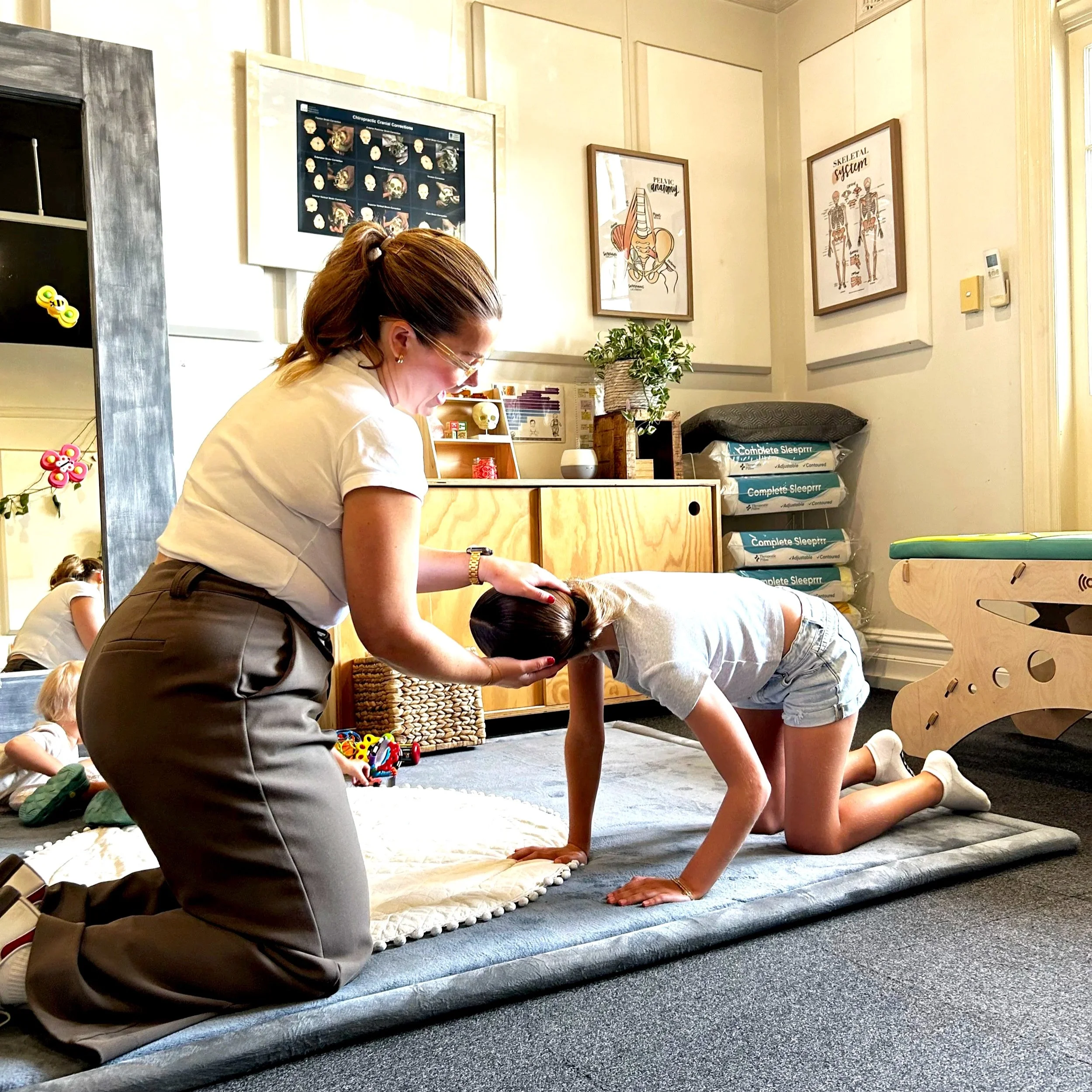
The Fear Paralysis Reflex (FPR) is one of the earliest primitive reflexes to develop in utero. While it plays a vital survival role before birth, this reflex should integrate very early in life. When it doesn’t, it can quietly influence how a person responds to stress, fear, sensory input, and even posture—well into childhood and adulthood.
At Nomad Chiropractic, we see retained primitive reflexes like the Fear Paralysis Reflex frequently in babies, children, teens, and adults across Sydney’s North Shore and Northern Beaches—especially in those dealing with anxiety, emotional overwhelm, sleep issues, sensory sensitivity, or chronic stress.
This blog will help you understand:
What the Fear Paralysis Reflex is
Signs and symptoms of retention (at any age)
How it affects the nervous system
Home care strategies that can help
How chiropractic care supports reflex integration
When to seek professional help
What Is the Fear Paralysis Reflex?
The Fear Paralysis Reflex develops around 5–6 weeks in utero and is governed by the brainstem—the most primitive part of the nervous system. Its role is simple but powerful:
freeze in response to a perceived threat.
Before birth, this reflex helps the developing baby respond to danger by:
Halting movement
Increasing muscle tone
Triggering a stress response
As the nervous system matures, higher brain centres (especially the limbic system and prefrontal cortex) take over. The Fear Paralysis Reflex should integrate very early—often before birth or shortly after.
When it doesn’t, the body remains wired for constant threat detection.
Why a Retained Fear Paralysis Reflex Matters
A retained FPR keeps the nervous system stuck in a chronic survival state. Instead of responding appropriately to real danger, the body reacts to everyday stimuli—noise, change, social interaction, expectations—as if they are threats.
This can contribute to:
Ongoing anxiety or fear-based behaviour
Emotional dysregulation
Poor stress tolerance
Sensory overload
Sleep disturbances
Postural tension and breathing issues
Importantly, this is not a character flaw or psychological weakness. It is a neurological pattern.
Signs and Symptoms of a Retained Fear Paralysis Reflex
In Babies
Startles easily to sound, light, or touch
Difficulty settling or sleeping
High muscle tension or stiffness
Shallow or irregular breathing
In Children
Anxiety or excessive fearfulness
Emotional meltdowns or shutdowns
Sensory sensitivities (noise, clothing, food textures)
Avoidance of new situations
Poor balance or coordination
Bedwetting or sleep issues
In Teens
Social anxiety
Overwhelm at school
Panic responses to pressure
Poor emotional regulation
Headaches or jaw tension
In Adults
Chronic anxiety or hypervigilance
Feeling “stuck” or frozen under stress
Fatigue despite rest
Poor sleep quality
Neck, jaw, or upper back tension
Shallow breathing patterns
Many adults are surprised to learn that their stress response may be rooted in early neurological development.
How the Fear Paralysis Reflex Affects the Nervous System
When FPR is retained:
The sympathetic nervous system dominates
The body prioritises survival over digestion, learning, and repair
The vagus nerve’s calming influence is reduced
Cortisol levels may remain elevated
This creates a nervous system that is reactive instead of adaptive.
Over time, this can impact:
Immune function
Hormonal balance
Gut health
Emotional resilience
Learning and focus
Home Care Strategies to Support Integration
While reflex integration should be guided by a trained professional, home support plays a vital role.
1. Create Predictable Safety
Consistent routines
Clear expectations
Calm transitions
A nervous system that feels safe integrates more efficiently.
2. Support Breathing
Slow nasal breathing
Gentle belly breathing
Extended exhale practices
These help down-regulate the stress response.
3. Limit Overstimulation
Reduce screen exposure
Monitor noise and light
Allow regular sensory breaks
4. Gentle Reflex-Based Movement
Specific movements designed to mimic early neurological patterns can help the brain reprocess and integrate primitive reflexes. These should be:
Slow
Controlled
Repetitive
Performed consistently
(Always seek professional guidance for correct sequencing.)
Chiropractic Care and the Fear Paralysis Reflex
At Nomad Chiropractic, we take a neurological and developmental approach to reflex retention.
Chiropractic care supports Fear Paralysis Reflex integration by:
Improving brain–body communication
Reducing stress on the nervous system
Supporting healthy sensory processing
Enhancing vagal tone
Improving spinal and postural input to the brain
Gentle, age-appropriate chiropractic adjustments help the nervous system move out of survival mode and into regulation.
This is particularly valuable for:
Babies and children with sensory or emotional challenges
Teens under academic or social stress
Adults with long-standing anxiety or burnout
Our clinic is recognised for nervous system-focused chiropractic care across Sydney, the North Shore, and Northern Beaches, with families often travelling specifically for our expertise in primitive reflex integration.
Why Early Support Matters
The longer a reflex remains active, the more deeply it becomes embedded in daily patterns. Early identification and support can:
Improve emotional regulation
Reduce anxiety
Enhance learning and focus
Improve sleep and resilience
Support long-term nervous system health
That said, it is never too late. Adults can experience profound changes when their nervous system finally feels safe enough to let go of old reflexes.
Homecare Movement Tips
We have a lot of homecare tips on our website here. But before you start doing every exercise under the sun we recommend getting checked and adjusted because some may integrate without the need of an extensive home-care regime with chiropractic care.
📲 FOLLOW SANDY ON SOCIALS! She gives heaps of Homecare intentional movement tips.
👉[Facebook]
👉[Instagram]
FAQ: Fear Paralysis Reflex Integration
1. Can the Fear Paralysis Reflex really affect adults?
Yes. Many adults with anxiety, chronic stress, or emotional overwhelm have retained primitive reflexes that were never addressed in childhood.
2. Is this the same as anxiety?
No. Anxiety can be a symptom. A retained Fear Paralysis Reflex is a neurological driver that may contribute to anxiety.
3. How long does integration take?
This varies. Some people notice changes within weeks, while others require several months to years of consistent care and home support.
A retained Fear Paralysis Reflex can quietly shape how you—or your child—experience the world. Understanding it is the first step toward change.
At Nomad Chiropractic, we focus on nervous system-based care, helping families across Sydney’s North Shore and Northern Beaches move from survival to regulation.
If you’re noticing signs of anxiety, overwhelm, or poor stress tolerance—we’re here to help.
If you or your child show signs of chronic stress, anxiety, or nervous system overwhelm, a retained Fear Paralysis Reflex may be part of the picture. A nervous system assessment can help determine the next supportive steps.
Want to learn more? Book a FREE 15min discovery call with one of our North Shore Paediatric & Retained Primitive Reflex Chiropractors today: Book HERE
👉 Book a nervous system assessment today and take the first step toward calmer, more resilient living.
-
Goddard Blythe, S. Reflexes, Learning and Behaviour. Fern Ridge Press.
Goddard Blythe, S. Attention, Balance and Coordination. Wiley-Blackwell.
Melillo, R. Disconnected Kids. Penguin Random House.
Porges, S. The Polyvagal Theory. W. W. Norton & Company.
Schore, A. Affect Regulation and the Origin of the Self. Routledge.
Ayres, A. J. Sensory Integration and the Child. Western Psychological Services.
Teicher, M. H. et al. “The neurobiological consequences of early stress.” Biological Psychiatry.
Kolb, B., Gibb, R. “Brain plasticity and behaviour.” Annual Review of Psychology.
Australian Spinal Research Foundation – Neurological models of chiropractic care.
Haavik, H. The Reality Check.
ICPA Clinical Practice Guidelines on Paediatric Chiropractic Care.
Panksepp, J. “Affective neuroscience.” Oxford University Press.
-
The information provided by Nomad Chiropractic is intended for general educational purposes only and is not a substitute for professional medical advice, diagnosis, or treatment.
Chiropractic care, movement strategies, and nervous system–based approaches aim to support overall function and wellbeing. They do not diagnose or treat medical conditions, learning disorders, behavioural conditions, or developmental diagnoses.
Every child is unique, and responses to care may vary. Any concerns regarding your child’s health, development, learning, or behaviour should be discussed with a qualified healthcare professional. Always seek advice from your GP, paediatrician, or other appropriately registered health practitioner regarding specific medical concerns.
This content does not replace individual assessment or care. Decisions about your child’s health should be made in consultation with qualified professionals familiar with your child’s individual needs.
What is the Fear Paralysis Reflex?
The Fear Paralysis Reflex is a primitive brainstem reflex that triggers a freeze response to perceived threat. When retained, it can keep the nervous system in a constant state of stress and hypervigilance.