
Headaches and Chiropractic Care: Natural Relief for a Common Complaint

Headaches are one of the most common health complaints worldwide. Whether it’s a dull ache at the end of a long day, a sharp pain behind the eyes, or a pounding migraine that sends you to a dark room, headaches can significantly disrupt your life.
In fact, the World Health Organization estimates that nearly 50% of adults experience at least one headache per year, with many experiencing them regularly or chronically (WHO, 2016). And yet, despite how widespread they are, headaches are often misunderstood—and frequently over-medicated.
At Nomad Chiropractic, we take a different approach. Rather than masking symptoms with medication, we look at the body as a whole to uncover and address the root causes of headaches—especially those related to the spine, posture, and nervous system.
Types of Headaches (And Why It Matters)
Not all headaches are the same. Understanding the type of headache you’re experiencing helps us tailor both treatment and home care advice.
1. Tension-Type Headaches
These are the most common. They feel like a tight band around your head, often caused by muscle tension in the neck, shoulders, and scalp.
Triggers: Stress, poor posture, long hours at a desk, clenching the jaw, or spinal dysfunction.
2. Cervicogenic Headaches
These originate in the neck but are felt in the head. They’re usually one-sided and worsen with certain neck movements.
Triggers: Neck stiffness, whiplash, upper cervical subluxations, poor ergonomics.
3. Migraines
Migraines are more complex. They may be accompanied by nausea, light sensitivity, and visual disturbances (aura).
Triggers: Hormonal changes, stress, neck dysfunction, food sensitivities, sleep disturbances.
4. Cluster Headaches
Less common but extremely painful. Often felt around one eye and occur in cyclical patterns.
Triggers: Unknown, but linked to neurological pathways and circadian rhythms.
The Chiropractic Perspective: Why Your Spine Might Be to Blame
At the core of chiropractic care is the nervous system—your body’s control centre. The spine protects the spinal cord, and when spinal segments (vertebrae) are not moving properly, this can cause interference in nerve communication and lead to symptoms like headaches.
We call this dysfunction a vertebral subluxation. When these subluxations occur in the upper cervical spine (C1-C3), they can impact the trigeminal nerve, muscle tension, and blood flow, all of which are associated with various types of headaches (Knox et al., 2011).
A study published in the Journal of Manipulative and Physiological Therapeutics found that spinal adjustments can significantly reduce the frequency and intensity of cervicogenic and tension headaches (Boline et al., 1995). Other research suggests that chiropractic care can even be as effective as common medications for migraines—but without the side effects (Tuchin et al., 2000).
How Chiropractic Care Can Help
At Nomad Chiropractic, we take a whole-body, neurologically-informed approach to managing and preventing headaches.
Here’s how:
1. Spinal Adjustments
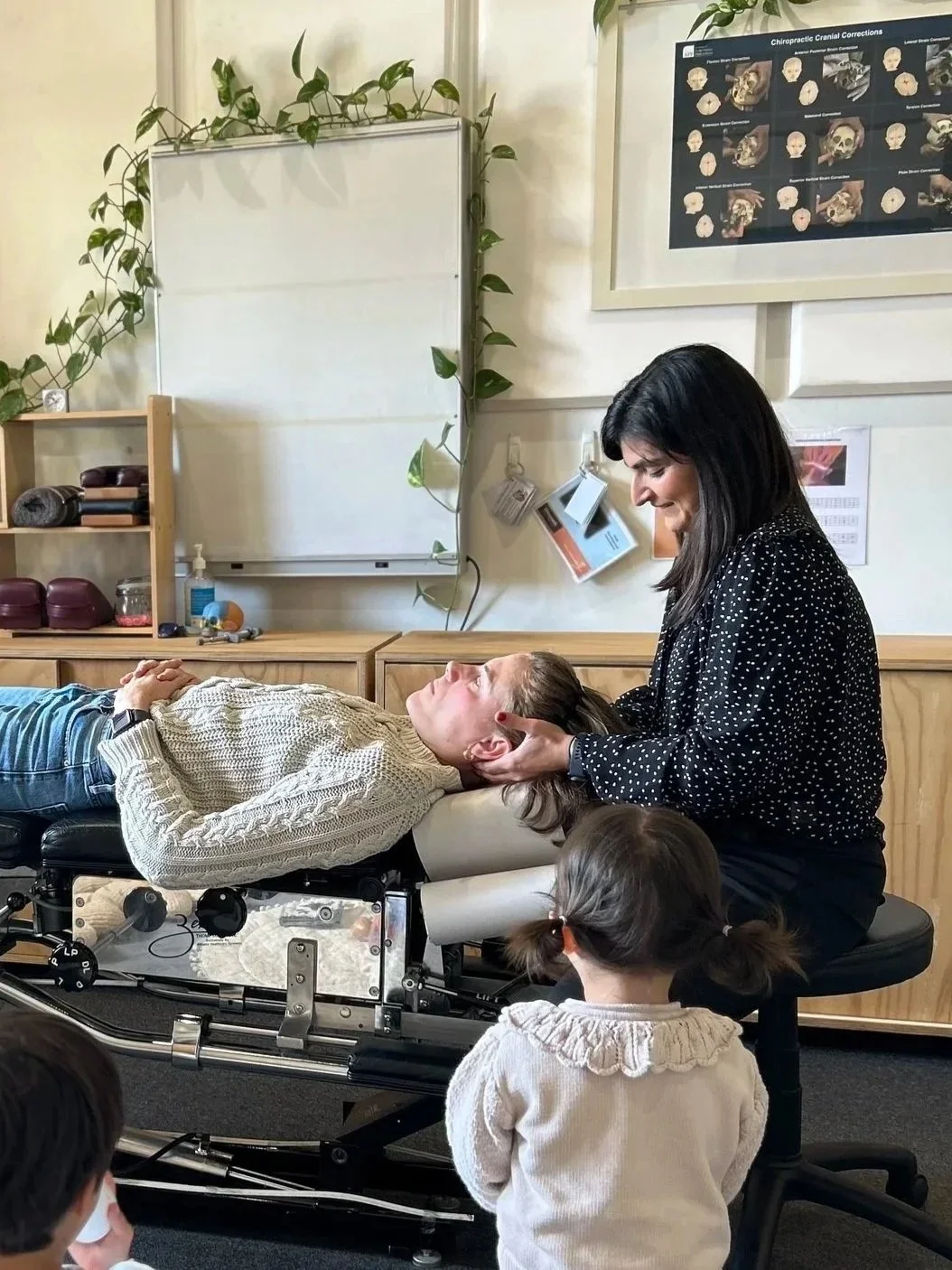
Gentle, targeted chiropractic adjustments help restore normal motion to spinal joints—especially in the upper neck—reducing pressure on nerves and improving blood flow to the brain.
2. Postural Retraining
Poor posture (like forward head carriage from phones and laptops) strains the neck and shoulder muscles, a major trigger for tension headaches. We help you correct these patterns with movement-based retraining and lifestyle advice.
3. Soft Tissue Techniques
We use manual therapy, trigger point release, and stretching to address muscular imbalances and reduce tension in the neck, shoulders, and jaw.
4. Cranial Techniques
Cranial adjustments can be especially helpful for chronic migraines or headaches related to jaw dysfunction (TMJ disorders).
5. Nervous System Regulation
We assess how your body is adapting to stress using neurological scans and gentle adjustments to restore balance and help your nervous system shift out of “fight or flight” mode.
Common Headache Triggers We Look For
Forward head posture
Past whiplash or neck trauma
TMJ dysfunction (jaw tension, clenching)
Hormonal changes
Poor sleep habits
Stress and emotional load
Dehydration or poor nutrition
Home Care Tips for Headache Relief
Chiropractic is powerful, but what you do at home makes a big difference too. Here are some simple, effective strategies you can start today:
1. Hydration First
Even mild dehydration can trigger headaches. Aim for 2–3 litres of water per day, especially if you're active, breastfeeding, or in a warm climate.
2. Desk Ergonomics Check
Keep your computer monitor at eye level, feet flat on the ground, and elbows at 90 degrees. Avoid craning your neck down to look at your phone—hello, tech neck!
3. The 20-20-20 Rule
Every 20 minutes, look 20 feet away for 20 seconds to reduce eye and neck strain.
4. Stress Management
Headaches often worsen with stress. Try breathwork, yoga, meditation, or journaling—even 5 minutes a day can shift your nervous system into a calmer state.
5. Magnesium-Rich Foods
Magnesium supports nerve and muscle function and may reduce headaches. Add foods like leafy greens, almonds, and avocado to your plate—or ask your practitioner if supplementation is right for you (Sun-Edelstein & Mauskop, 2009).
6. TMJ and Jaw Awareness
Notice if you clench your jaw or grind your teeth (especially at night). A chiropractor trained in TMJ care can assess jaw alignment and tension.
7. Movement Matters
A short daily walk or mobility session helps circulation and reduces physical tension. Gentle stretches for the neck, shoulders, and upper back are especially beneficial. Check our General Home Exercise page for some simple tips!
📲 FOLLOW SANDY ON SOCIALS! She gives heaps of Homecare intentional movement tips.
👉[Facebook]
👉[Instagram]
Is It Time for a Chiropractic Check?
You might benefit from a chiropractic assessment if:
Your headaches are becoming more frequent
Pain radiates from the neck or upper back
Medications only provide temporary relief
You clench or grind your teeth
Your posture is suffering from long hours at a desk
You’ve had past head or neck trauma
You feel your headaches are stress-related
You just feel like “something’s not right” and want a natural solution
What to Expect at Your First Appointment
At Nomad Chiropractic, we take the time to get to know you and your health history. Your first visit may include:
Let’s chat - extensive history taking
Neurological and postural assessments
Chiropractic examination of your spine and jaw
Orthopaedic and muscular testing
A tailored care plan with home exercises and stress support
Your chiropractic care is always gentle, precise, and adapted to your needs—whether you're a busy professional, a new mum, a student under pressure, or an athlete pushing your limits.
The Nomad Difference when it comes to your headaches
What makes our approach unique?
🧠 Brain-Body Connection Focus – We prioritise how your nervous system is functioning, not just where it hurts.
👶 Lifespan Care – From babies to seniors, our team is trained to support all stages of life (yes, even kids get tension headaches!).
🏡 Home Care Integration – We empower you with lifestyle tools, not just in-clinic care.
🗺️ Local, Holistic, Heart-Centred – We’re proudly part of the Mosman and North Shore community, and we love helping our locals feel their best.
Real Results, Real Research
Chiropractic care was shown to reduce headache frequency and intensity in 90% of participants in a randomized controlled trial of cervicogenic headache sufferers (Jull et al., 2002).
Spinal manipulation was as effective as amitriptyline (a common migraine medication) in reducing migraine frequency—and with fewer side effects (Tuchin et al., 2000).
A 12-week chiropractic care plan led to sustained headache relief even after care ceased, showing long-term benefit (Boline et al., 1995).
A Gentle Reminder
Not all headaches require chiropractic care. Sudden, severe headaches, or those with neurological symptoms (slurred speech, loss of vision, numbness) need urgent medical attention. We collaborate with your GP or neurologist where needed to ensure your care is safe and appropriate.
You Don’t Have to Live With Headaches
Headaches may be common—but they’re not normal. If you’re tired of living on painkillers, cancelling plans, or missing out on life due to chronic headaches, it’s time to try a different approach.
Chiropractic care offers a safe, natural, and effective way to reduce headache frequency, improve nervous system function, and help you reclaim your wellbeing.
Nomad Chiropractic in the News!
Neighbourhood Media recently interviewed Sandy and Kristin about their holistic approach to headaches, migraines, TMJ & whole-body wellness with chiropractic care on Sydney’s Lower North Shore.
FAQ
-
Yes, chiropractors can help reduce the frequency and intensity of many types of headaches—especially those related to the neck, posture, and nervous system. Chiropractic care addresses spinal misalignments, muscle tension, and nervous system interference that often contribute to tension headaches, cervicogenic headaches, and migraines. At Nomad Chiropractic, we take a holistic approach, combining gentle spinal adjustments, postural support, and lifestyle strategies for long-term relief.
-
Chiropractic care is commonly used for tension headaches, cervicogenic headaches, and migraines. These headaches often involve the neck, shoulders, spine, or jaw. By improving spinal alignment and nervous system function, chiropractic may reduce pressure on nerves, improve blood flow, and ease muscle tension—all of which can reduce headache symptoms.
-
Chiropractic care is considered a safe and non-invasive option for many people experiencing headaches. At Nomad Chiropractic, we tailor care to your age, health history, and specific symptoms. We also collaborate with your GP, neurologist, or other health professionals if further investigation is needed. Sudden, severe, or unusual headaches should always be assessed medically first.
-
The number of sessions depends on the type, cause, and chronicity of your headaches. Some people feel relief after just a few visits, while others need a longer care plan to correct underlying dysfunction. During your initial assessment at Nomad Chiropractic, we’ll create a tailored plan that includes in-clinic care, home exercises, and stress support.
-
Simple home care strategies can make a big difference. We recommend:
Staying hydrated
Stretching your neck and shoulders
Correcting your posture at work
Managing stress through breathwork or mindfulness
Adding magnesium-rich foods to your diet
Using a heat pack or cold compress when appropriate
At Nomad Chiropractic, we provide personalised home care tips as part of your headache recovery plan.
Want to learn more? Book a FREE 15min discovery call with one of our Sydney Headache Chiropractors today: Book HERE
-
Boline, P.D., Kassak, K., Bronfort, G., Nelson, C., & Anderson, A.V. (1995). Spinal manipulation vs. amitriptyline for the treatment of chronic tension-type headaches: A randomized clinical trial. Journal of Manipulative and Physiological Therapeutics, 18(3), 148-154.
Jull, G., Trott, P., Potter, H., Zito, G., Niere, K., Shirley, D., ... & Richardson, C. (2002). A randomized controlled trial of exercise and manipulative therapy for cervicogenic headache. Spine, 27(17), 1835-1843.
Knox, R., Chapman, C., & Rosner, A. (2011). The trigeminocervical complex and its role in headache disorders. Practical Neurology, 11(5), 285-288.
Sun-Edelstein, C., & Mauskop, A. (2009). Role of magnesium in the pathogenesis and treatment of migraines. Clinical Neuroscience, 16(2), 255–263.
Tuchin, P.J., Pollard, H., & Bonello, R. (2000). A randomized controlled trial of chiropractic spinal manipulative therapy for migraine. Journal of Manipulative and Physiological Therapeutics, 23(2), 91–95.
World Health Organization. (2016). Headache disorders: Key facts. https://www.who.int/news-room/fact-sheets/detail/headache-disorders
-
This blog post is for general informational and educational purposes only. It is not intended to diagnose, treat, cure, or prevent any medical condition, nor should it be considered individual health advice. Please consult with your healthcare provider, chiropractor, or medical professional before making any decisions about your health or starting any new care program. Chiropractic care and outcomes may vary depending on individual circumstances. At Nomad Chiropractic, we provide personalised care based on a full clinical assessment and your unique needs. If you are experiencing sudden, severe, or unusual headaches, seek immediate medical attention.