
The Vagus Nerve, Dysautonomia & Headaches: What You Need to Know
If you’ve been battling stubborn headaches or migraines—especially ones that seem tied to stress, digestion, light sensitivity, heart palpitations, or fatigue—the problem may not be just in your head.
It could be your vagus nerve.
This powerhouse of the nervous system influences nearly every system in your body—especially your brain, gut, heart, and immune response. When the vagus nerve isn’t functioning properly (a state known as dysautonomia), it can contribute to a wide range of symptoms—including debilitating headaches.
At Nomad Chiropractic Mosman, we help patients regulate their vagus nerve, balance their nervous system, and reduce chronic headache and migraine symptoms—naturally and holistically.
Let’s explore what the vagus nerve is, how it impacts your head pain, and what you can do to support it.
All of our practitioners at our Lower North Shore clinic have vagus nerve regulation training.
What Is the Vagus Nerve?
The vagus nerve is the longest cranial nerve in your body. It originates in the brainstem, exits the skull near the upper neck, and travels down into the chest and abdomen—connecting your brain to your heart, lungs, gut, immune system, and more.
It’s a key part of your parasympathetic nervous system—the "rest and digest" branch responsible for calming the body, regulating inflammation, and restoring internal balance after stress.
When the vagus nerve is working well, you feel:
Calm and focused
Able to digest food properly
Clear-headed
Less reactive to stress
Less likely to get sick or inflamed
When it’s underperforming—or overwhelmed—you may experience:
Migraines or headaches
Dizziness, lightheadedness, or vertigo
Gut issues (constipation, nausea, IBS)
Poor sleep
Brain fog and fatigue
Anxiety or panic sensations
Rapid heart rate or temperature sensitivity
This state of dysautonomia (autonomic nervous system imbalance) is increasingly common—and it plays a major role in complex, chronic headaches.
The Vagus Nerve–Headache Connection
Here’s how the vagus nerve can contribute to headaches and migraines:
1. Brainstem Involvement
The vagus nerve originates in the medulla oblongata, a part of the brainstem involved in pain regulation, blood vessel control, and trigeminal nerve interaction. If there’s misalignment or tension in the upper cervical spine, it can irritate the vagus nerve’s pathway and impair its function—contributing to headache symptoms.
2. Autonomic Imbalance
When your body is stuck in sympathetic dominance ("fight or flight"), the vagus nerve’s calming influence is suppressed. This can lead to:
Dilated blood vessels in the brain (migraine trigger)
Heightened sensitivity to light, sound, and smells
Increased inflammation, which can amplify pain
3. Neuroinflammation
The vagus nerve plays a key role in the “inflammatory reflex”, helping to dampen inflammatory responses. Low vagal tone is associated with higher levels of pro-inflammatory cytokines—which are strongly linked to migraine activity (Goadsby, 2012).
4. Gut–Brain Axis
Your gut and brain are in constant communication via the vagus nerve. When vagal tone is low, gut motility and function can be impaired—leading to a buildup of toxins, histamines, and inflammatory markers that may contribute to headaches or food-triggered migraines.
What Is Dysautonomia?
Dysautonomia refers to dysfunction in the autonomic nervous system (ANS), which controls involuntary processes like heart rate, blood pressure, digestion, temperature, and—yes—headache pain processing.
It’s often underdiagnosed, but common in people with:
Chronic migraines
Postural Orthostatic Tachycardia Syndrome (POTS)
Fibromyalgia
Chronic fatigue
Long COVID
Concussion history
TMJ dysfunction
Hormonal migraines
Headaches that seem cyclical, temperature-sensitive, worsened by standing, or linked to fatigue or gut issues may have a vagal component.
How Chiropractic Supports the Vagus Nerve & Headache Relief
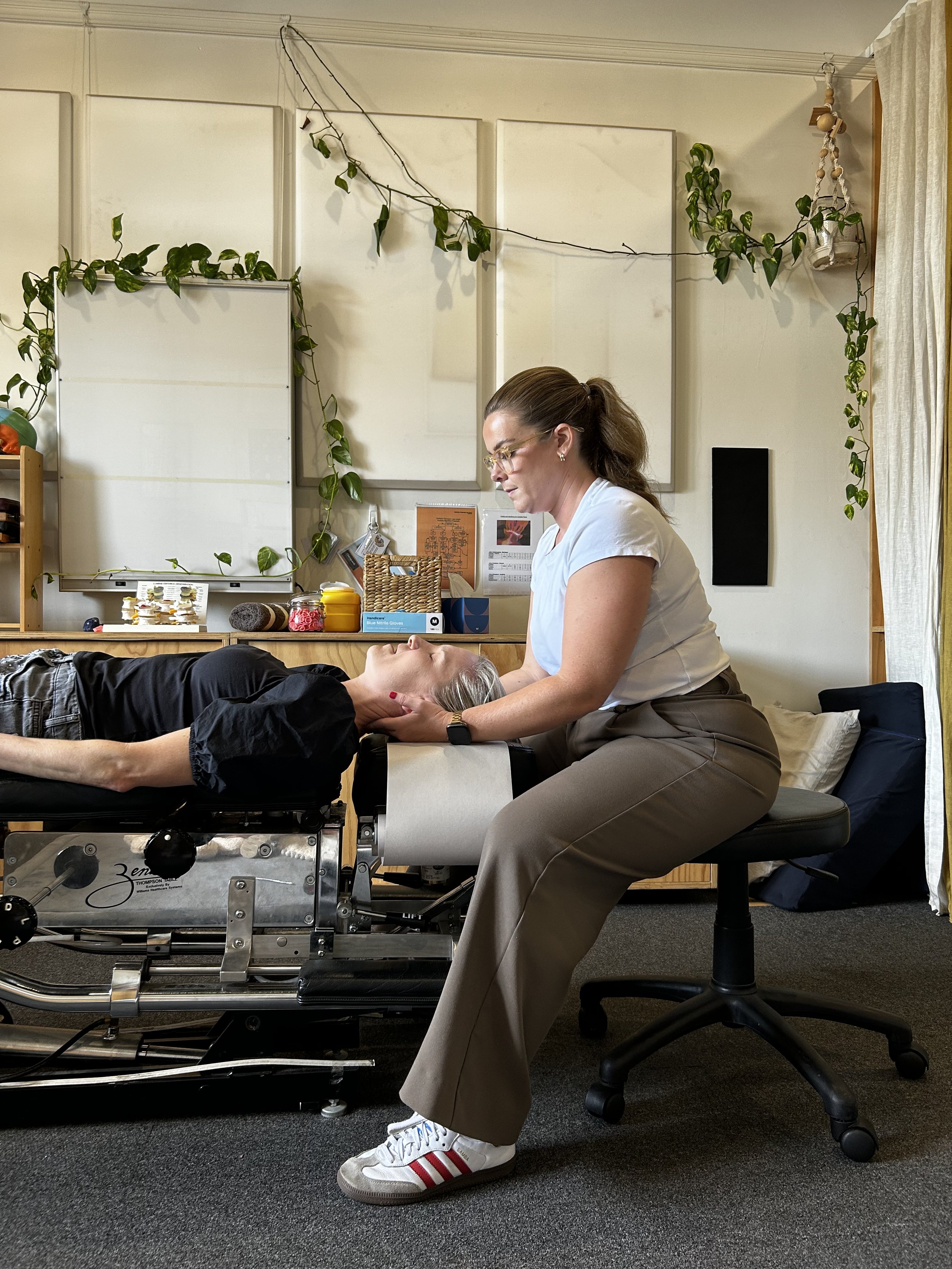
At Nomad Chiropractic in Mosman, we use a gentle, age-appropriate, neurologically-informed approach to care for children and teens with headaches. Our assessments are comprehensive, and our techniques are adapted to suit your child’s developmental stage.
Here’s what we look at:
Postural balance (head carriage, shoulder symmetry)
Spinal motion, especially in the cervical and upper thoracic regions
Muscle tone and asymmetry
Nervous system regulation (fight-or-flight activation)
Cranial motion and jaw tension (especially with bruxism or mouth breathing)
History of trauma, growth spurts, sleep quality, and emotional stress
Our care may include:
Gentle spinal adjustments (no cracking needed)
Cranial techniques
Posture and screen-time advice
Backpack and sleep set-up guidance
Nervous system scanning and stress support
Collaboration with other health professionals if needed
Our goal is not just to reduce symptoms—but to build resilience in your child’s body and brain so they can adapt to life’s stresses with more ease.
Home Strategies to Support Your Vagus Nerve
In addition to chiropractic care, here are some powerful ways to stimulate your vagus nerve naturally:
✅ 1. Breathwork
Slow, deep breathing (especially with long exhales) activates the vagus nerve. Try box breathing or 4-7-8 breathing to calm your system.
✅ 2. Cold Therapy
Splash cold water on your face or use a cold pack on the back of your neck to stimulate the vagus nerve via the diving reflex.
✅ 3. Gargling or Humming
These activate vagal motor fibres. Singing, humming, chanting, or even gargling water each morning can help.
✅ 4. Ear Massage
Gently massaging the tragus and concha (inside the ear) can activate auricular branches of the vagus nerve.
✅ 5. Movement & Posture
Gentle exercise, walking, and spinal alignment all support vagus tone. Avoid sitting slouched for long periods.
✅ 6. Laughter & Connection
Social safety, touch, and laughter are powerful vagus activators—spend time with loved ones or play with pets!
What the Research Shows
Vagal nerve stimulation has been shown to reduce migraine frequency and intensity, even in treatment-resistant cases (Yuan & Silberstein, 2016).
Poor vagal tone is associated with increased inflammatory cytokines that drive headache pain (Tracey, 2002).
Chiropractic adjustments can help balance autonomic function and improve vagal tone, particularly through upper cervical work (Haavik, 2014).
Breathing, cold exposure, and cranial nerve stimulation are all evidence-based methods for vagal activation (Breit et al., 2018).
The Nomad Difference
We’re not just treating pain—we’re helping you regulate your whole nervous system.
At Nomad Chiropractic in Mosman on Sydney’s Lower North Shore, our care is tailored to support chronic headache sufferers, nervous system overload, and vagal dysregulation. Whether your migraines are linked to hormones, digestion, stress, or posture, we create a personalised plan to reduce your pain and restore your resilience.
Homecare Movement Tips
📲 FOLLOW SANDY ON SOCIALS! She gives heaps of Homecare intentional movement tips.
👉[Facebook]
👉[Instagram]
Nomad Chiropractic in the News!
Neighbourhood Media recently interviewed Sandy and Kristin about their holistic approach to headaches, migraines, TMJ & whole-body wellness with chiropractic care on Sydney’s Lower North Shore.
FAQ
-
Yes. The vagus nerve influences pain regulation, blood flow, inflammation, and stress—all key factors in migraines and chronic headaches. Dysfunction here can amplify symptoms.
-
Dysautonomia is an imbalance in the autonomic nervous system. It can lead to poor vagal tone, increased inflammation, and irregular blood vessel control—all of which are known migraine triggers.
-
Chiropractic adjustments—especially to the upper neck—can reduce interference around the vagus nerve, regulate nervous system tone, and support the body’s ability to self-heal.
-
Common signs include migraines, dizziness, nausea, irregular heartbeat, poor digestion, chronic fatigue, and light/sound sensitivity—often worsened by stress.
-
Yes. Breathwork, cold exposure, humming, ear massage, and gentle movement are great tools to improve vagal tone between chiropractic visits.
Want to learn more? Book a FREE 15min discovery call with one of our Sydney Headache and Migraine Chiropractors today: Book HERE
-
Goadsby, P. (2012). Pathophysiology of migraine. Ann Indian Acad Neurol.
Tracey, KJ. (2002). The inflammatory reflex. Nature.
Yuan, H., & Silberstein, S. (2016). Non-invasive vagus nerve stimulation for primary headache. Cephalalgia.
Breit, S., Kupferberg, A., Rogler, G., Hasler, G. (2018). Vagus nerve as modulator of the brain–gut axis in psychiatric and inflammatory disorders. Front Psychiatry.
Haavik, H. (2014). The Reality Check: A quest to understand chiropractic from the inside out.
-
This blog post is for general informational and educational purposes only. It is not intended to diagnose, treat, cure, or prevent any medical condition, nor should it be considered individual health advice. Please consult with your healthcare provider, chiropractor, or medical professional before making any decisions about your health or starting any new care program. Chiropractic care and outcomes may vary depending on individual circumstances. At Nomad Chiropractic, we provide personalised care based on a full clinical assessment and your unique needs. If you are experiencing sudden, severe, or unusual headaches, seek immediate medical attention.