
Migraine vs Headache: What’s the Difference and Why It Matters
Understanding symptoms, causes, and how chiropractic care can help

Why This Matters
You wake up with a throbbing head. Is it a migraine? A tension headache? Sinus? Or something else entirely?
It’s easy to lump all head pain under the label of "headache", but there are key differences—and understanding which type you’re experiencing is critical to finding effective, lasting relief.
At Nomad Chiropractic in Mosman, we see people every day from the North Shore, Northern Beaches and even Greater Sydney, who’ve been living with the wrong label—and the wrong treatment—for years.
This blog unpacks the key differences between headaches and migraines, explains how chiropractic care can help, and offers practical tips to take back control of your nervous system.
Headache vs Migraine: Key Differences
Let’s start with the basics:
Headache symptoms/signs
Usually mild to moderate pain
Pressure or dull ache across forehead, temples, or back of head
Rarely comes with other symptoms
Often triggered by stress, dehydration, poor posture
Shorter duration (30 mins – few hours)
Migraine symptoms/signs
Moderate to severe, often disabling
Throbbing/pulsing pain, often one-sided
Often includes nausea, light/sound sensitivity, aura
Triggered by hormones, food, sensory overload, stress
Can last 4–72 hours or more
Note: Some migraines occur without pain, presenting as visual disturbances, dizziness, or nausea—making diagnosis even trickier.
Types of Headaches
Understanding the type of headache helps guide treatment. Some common types include:
1. Tension-Type Headaches
Most common
Dull, aching pain, band-like pressure
Often stress, dehydration, or poor posture related
2. Cervicogenic Headaches
Originate from dysfunction in the neck
Pain referred to head, often one-sided
Often worsens with neck movement
3. Cluster Headaches
Rare but severe
Intense, stabbing pain near one eye
Occurs in cyclical patterns ("clusters")
So… What is a Migraine?
Migraines are more than just bad headaches. They’re a neurological disorder involving:
Nervous system hypersensitivity
Inflammation of brain blood vessels
Altered pain processing in the brainstem and cortex
Common symptoms:
Throbbing or pulsating pain
Visual disturbances (auras)
Nausea or vomiting
Light, smell, and sound sensitivity
Fatigue or brain fog
When Headaches Become Chronic
Chronic headaches or migraines are diagnosed when symptoms occur:
More than 15 days/month for 3+ months
Impacting daily life, work, sleep, or mood
Recurrent even with medications
Many people with chronic migraines report a history of:
Past neck injuries
Hormonal imbalances
Birth trauma or retained primitive reflexes (especially in kids and teens)
How Chiropractic Care Can Help
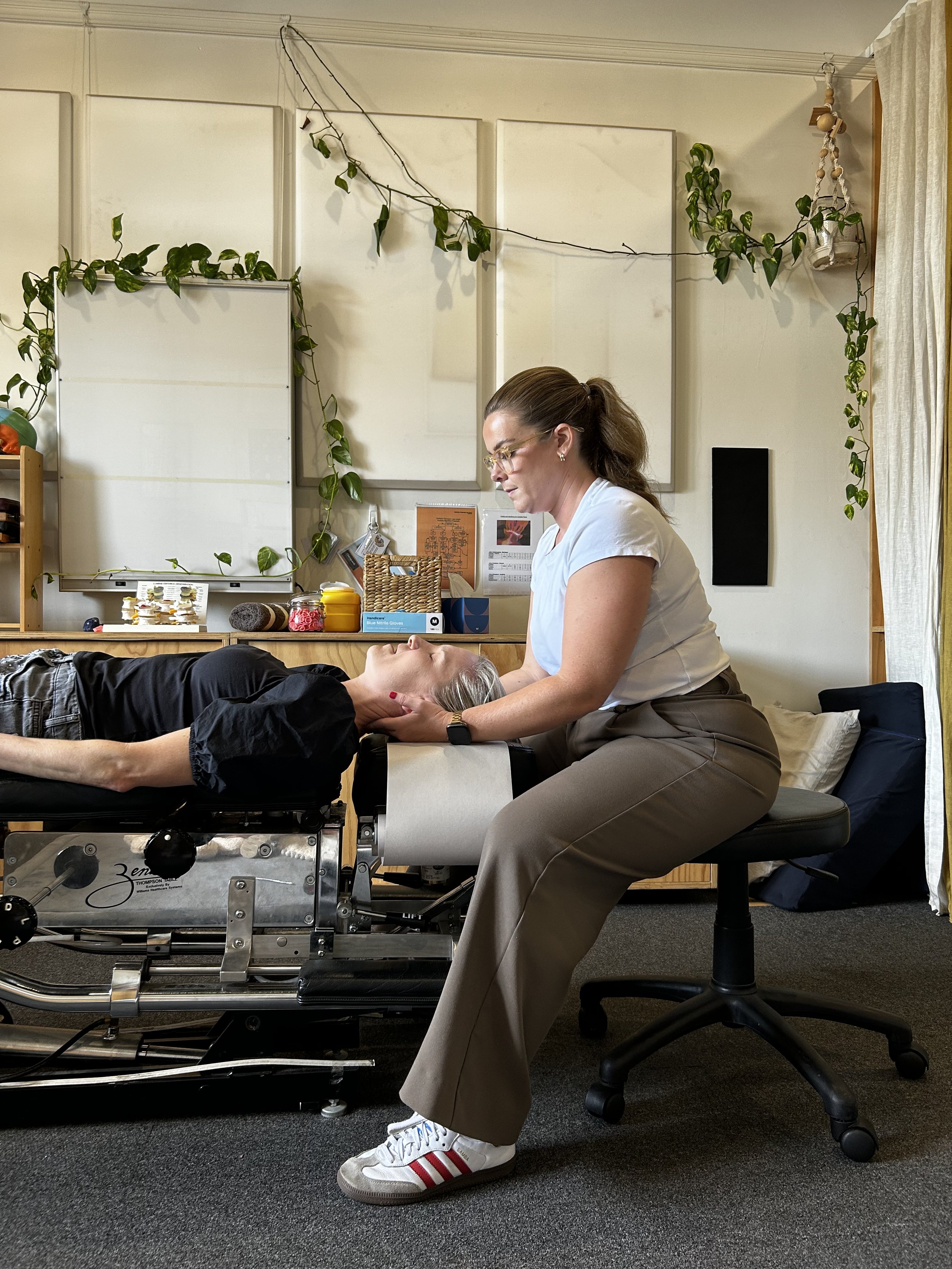
Chiropractors don’t "treat" migraines directly—but we work with the nervous system and spine, which influence many of the underlying triggers.
What We Assess at Nomad:
Cervical spine and TMJ function (jaw tension and alignment)
Postural imbalances and screen-related strain
Autonomic nervous system balance (sympathetic vs parasympathetic)
Primitive reflexes in kids and teens
Cranial and dural tension in babies and adults
How We Help:
Gentle adjustments to restore movement and function
Nervous system regulation (often via tonal and cranial work)
Lifestyle advice: posture, breathing, hydration, hormone support
Collaboration with naturopaths, acupuncturists, and integrative GPs
💡 Research shows chiropractic care may reduce migraine frequency, intensity, and medication use in some individuals (Bryans et al., 2011).
Homecare Tips for Headache & Migraine Relief
Try these between appointments:
Posture resets: Set hourly reminders to stretch and align.
Cold compress: For throbbing migraines.
Heat pad: For tension-type headaches.
Magnesium-rich foods: Dark greens, seeds, nuts.
Breathwork: Long, slow exhales to activate vagus nerve.
Track your cycle: Hormones often play a role—keep a migraine diary.
When to Get Checked
It’s time to see a chiropractor if you’re:
Experiencing headaches more than once a week
Not responding to medications or lifestyle changes
Noticing changes in neck tension, posture, or jaw alignment
A teen or child with unexplained fatigue, nausea, or visual symptoms
The Nomad Difference
At Nomad Chiropractic in Mosman, we take the time to understand your unique headache story. We’re known for:
Long Initial Consultations (45min) allowing us to deep dive your history, your unique journey.
Paediatric to adult care - our techniques are tailored to age and stage meaning we can care for the whole family from newborn to the elderly.
Collaboration with your GP or specialist. Co-management for complex cases is key.
Gentle, evidence-informed care
Homecare Movement Tips
📲 FOLLOW SANDY ON SOCIALS! She gives heaps of Homecare intentional movement tips.
👉[Facebook]
👉[Instagram]
Nomad Chiropractic in the News!
Neighbourhood Media recently interviewed Sandy and Kristin about their holistic approach to headaches, migraines, TMJ & whole-body wellness with chiropractic care on Sydney’s Lower North Shore.
FAQ
-
Migraines are a neurological condition that often come with symptoms like nausea, light sensitivity, and aura, while headaches usually involve milder pain and fewer symptoms.
-
Yes, chiropractic care may help reduce migraine frequency and severity by addressing spinal alignment, nerve interference, and nervous system regulation.
-
Cervicogenic headaches often worsen with neck movement and are typically one-sided. A chiropractor can assess this with a thorough physical and neurological exam.
-
Yes—especially during growth spurts, screen overuse, or stress. Many teens are misdiagnosed or overlooked. Chiropractic can support neurodevelopment and alignment.
-
Postural resets, magnesium, hydration, sleep, chiropractic adjustments, and vagus nerve stimulation can all be helpful.
Want to learn more? Book a FREE 15min discovery call with one of our Sydney Headache and Migraine Chiropractors today: Book HERE
-
Bryans R, Descarreaux M, Duranleau M, et al. Evidence-Based Guidelines for the Chiropractic Treatment of Adults With Headache. J Manipulative Physiol Ther. 2011;34(5):274-289. https://doi.org/10.1016/j.jmpt.2011.02.007
Headache Classification Committee of the International Headache Society (IHS). The International Classification of Headache Disorders, 3rd edition. Cephalalgia. 2018.
Ashina M. Migraine. N Engl J Med. 2020;383:1866-1876.
Goadsby PJ, Holland PR, Martins-Oliveira M, et al. Pathophysiology of Migraine: A Disorder of Sensory Processing. Physiol Rev. 2017;97(2):553–622.
Luedtke K, Starke W, May A. Musculoskeletal dysfunction in migraine patients. Cephalalgia. 2018;38(5):865-875.
-
Chiropractors do not claim to cure migraine conditions. Chiropractic care focuses on improving spinal function and supporting the nervous system, which may assist with the management of symptoms in some individuals. Individual results may vary. This information is general and not a substitute for individual health advice. Always consult your healthcare provider.