
Disc Herniation: Causes, Symptoms and Natural Relief
QUICK Associated Links:
2) Sciatica
Disc Herniation: Causes, Symptoms and Natural Relief
Disc herniations (often called a “slipped” or “bulging disc”) are a common cause of back pain, neck pain and sciatica. They occur when part of a spinal disc becomes irritated and begins to press on nearby nerves.
At Nomad Chiropractic in Mosman, we focus on restoring movement, reducing nerve irritation and helping your body recover naturally — without jumping straight to invasive options.
Disc Herniation: Causes, Symptoms and Natural Relief
If you’re dealing with ongoing back pain, nerve symptoms, or pain travelling down your leg, there’s a good chance you’ve come across the term disc herniation.
It’s one of those diagnoses that can feel a bit confronting at first.
We often hear things like:
“I’ve been told I’ve got a slipped disc — is that serious?”
“Will this heal on its own?”
“Do I need surgery?”
The reassuring part is this:
👉 Most disc injuries respond really well to the right kind of care, movement and time.
At Nomad Chiropractic, we see this every week — people coming in after searching for answers, often frustrated, sometimes worried, but very recoverable.
What Actually Is a Disc Herniation?
Your spine isn’t just a stack of bones — it’s a moving, adaptable structure.
Between each vertebra sits a disc, which acts like a shock absorber.
Each disc has:
a tougher outer layer
a softer, gel-like centre
A disc herniation happens when that inner gel pushes outward and irritates surrounding structures — particularly nearby nerves.
That irritation is what creates symptoms.
Not just the disc itself.
And this is important — because it shifts the focus from “something is damaged” to
👉 “something is irritated and needs to calm down and move better.”
Why Do Disc Herniations Happen?
Most people expect there to be one clear cause.
But in reality, disc injuries tend to build over time.
It’s usually a combination of:
▪️Repetitive positioning
Long hours sitting, especially in a flexed posture, increase pressure through the discs.
▪️Reduced movement
When certain parts of the spine stop moving well, other areas take on more load.
▪️Lifting habits
It’s often not what you lift — but how often and how you move when you do it.
▪️Sudden overload
A twist, a bend, a lift — layered on top of an already stressed system.
▪️General wear and adaptation
Discs change over time — that’s normal.
What matters is how well the surrounding system is functioning.
What Does a Disc Herniation Feel Like?
This is usually where people start searching for answers.
Because the symptoms can be quite specific.
In the lower back
You might notice:
a deep ache in the lower back
pain travelling into the buttock or leg
tingling, pins and needles, or numbness
discomfort when sittinglower back
relief when standing or walking
That “pain down the leg” is what most people recognise as sciatica.
In the neck
It can feel more like:
neck stiffness or tightness
headaches
pain into the shoulder or arm
tingling into the fingers
And here’s something we always explain in clinic:
👉 The scan doesn’t always match the pain.
Many people have disc bulges or herniations on imaging and feel completely fine.
Which is why how your body is functioning matters more than what the scan says.
Why Does It Cause Nerve Pain?
The spine protects the nervous system.
When a disc becomes irritated, it can affect nearby nerves — not always through direct pressure, but often through inflammation and sensitivity.
That’s when symptoms travel.
Down the leg.
Into the arm.
Into the foot or hand.
So rather than thinking:
❌ “the disc is the problem”
It’s more accurate to think:
👉 “the nerve is irritated, and we need to reduce that irritation.”
Can It Heal?
This is one of the biggest questions people ask.
And the answer is reassuring:
👉 Yes — in many cases, it can.
The body is very capable of adapting and healing.
Disc injuries often improve as:
inflammation settles
movement improves
load is distributed more evenly
the nervous system becomes less sensitised
This is why staying gently active is usually far more helpful than complete rest.
When Do People Usually Come In For This?
This is something we see a lot.
Most people don’t come in when it first starts.
They come in when:
the second it becomes a problem; or if
it’s been lingering for weeks
it’s not improving the way they expected
the pain starts travelling (especially into the leg or arm)
or it’s beginning to affect sleep, work or daily movement
Often, by that point, the body has already been compensating for a while.
👉 The earlier we assess how the spine is moving and how the nervous system is responding, the easier it is to guide things back on track.
That said — it’s never “too late” to start supporting recovery.
What Helps a Disc Herniation Settle?
This is where small changes can make a big difference.
Keep moving (within reason)
Complete rest tends to slow things down.
Gentle, regular movement helps circulation and recovery.
Reduce prolonged sitting
If you’re sitting for long periods, break it up often.
Even standing for a minute or two helps.
Find your neutral
Posture isn’t about being rigid — it’s about being supported.
Think:
feet grounded
spine stacked
shoulders relaxed
Sleep matters more than people think
We talk about this a lot at Nomad.
A neutral spine sleeping position can significantly reduce overnight irritation.
We often recommend supportive pillows like the Complete Sleeprrr range, which help maintain alignment (and yes — we stock both adult and kids versions in clinic and online).
What Can Slow Down Recovery?
This is the part that often surprises people.
It’s not usually one big thing — it’s the accumulation of small habits.
We commonly see recovery slow down when:
there’s too much complete rest (the spine stiffens)
sitting time stays high without breaks
people push through sharp or worsening nerve pain
or there’s no clear plan guiding movement and progression
One of the biggest misconceptions is:
👉 “I just need to rest and wait for it to heal.”
In reality, the right kind of movement is often what helps things settle.
Simple Movements That Can Help
These aren’t about “fixing” the disc — they’re about supporting the system around it.
Prone press-ups (Cobra)
A gentle extension movement that can reduce disc-related pressure.
Pelvic tilts
Helpful for reconnecting core and spinal support.
Walking
Underrated, but incredibly effective.
Even 10–15 minutes can shift how the spine feels.
What Happens at a Nomad Chiropractic Appointment?
We keep things simple, thorough and personalised.
We listen first
Your story matters — how it started, what aggravates it, what helps.
We assess movement
Not just where it hurts, but how your spine is functioning as a whole.
We check the nervous system
Reflexes, strength, sensation — how everything is communicating.
Then we tailor care
This may include:
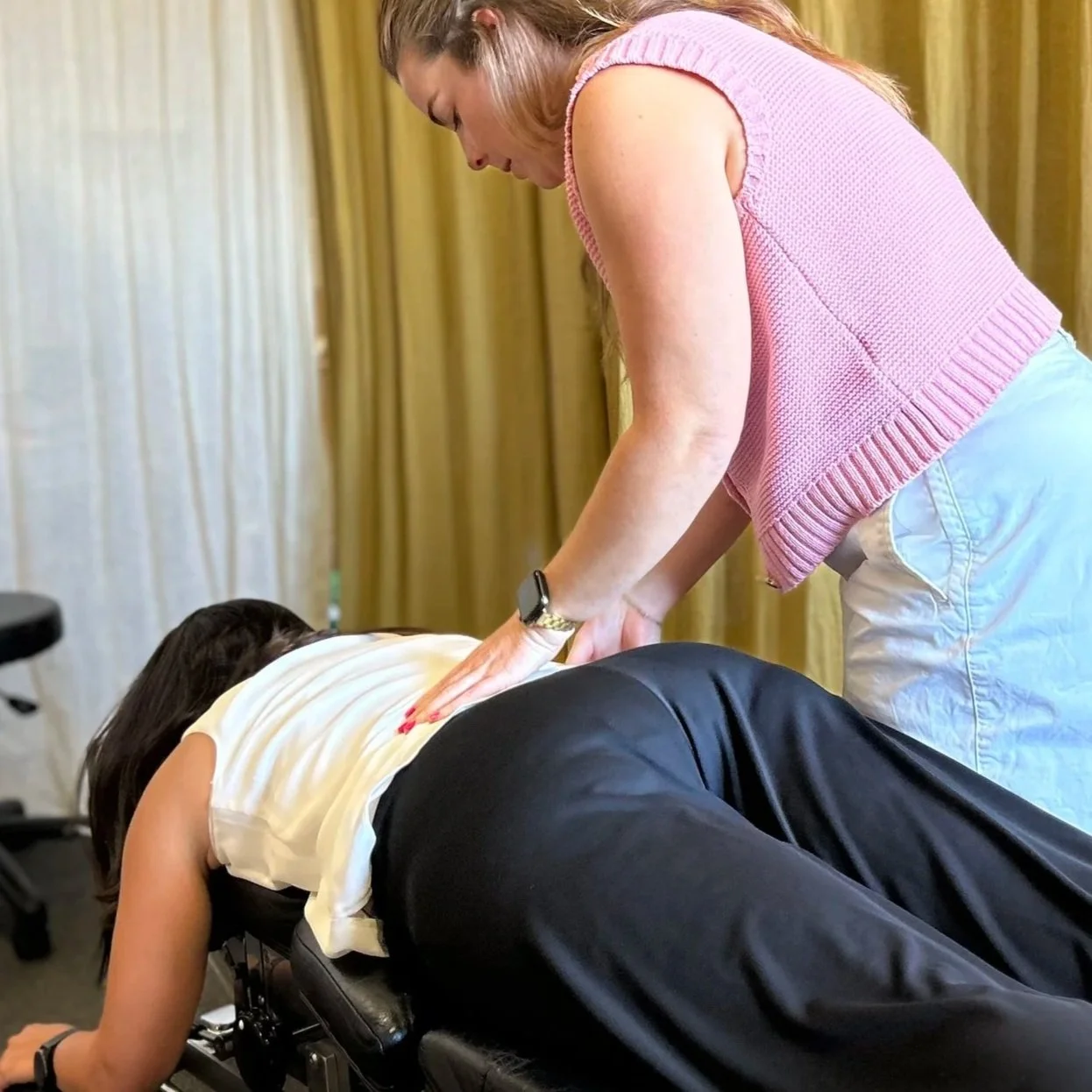
gentle adjustments
mobility work
soft tissue support
guidance on movement and recovery
And importantly — we guide you
Because recovery isn’t just what happens in clinic.
It’s what you do between visits that really matters.
What Does Recovery Usually Look Like?
Recovery from a disc injury is rarely linear — and that’s completely normal.
Most people notice changes in stages:
Early phase
pain may still be present
symptoms may fluctuate
certain movements feel limited
Middle phase
pain becomes less intense
symptoms centralise (move closer to the spine)
movement feels more natural
Later phase
strength and confidence return
flare-ups become less frequent
daily activities feel easier
👉 The goal isn’t just to “get out of pain” — it’s to restore how your body moves so the issue is less likely to keep coming back.
The Nomad Difference
People often find us after trying a few different things.
What tends to resonate is this:
👉 We’re not just chasing symptoms.
We’re looking at:
how your spine moves
how your nervous system is responding
how your lifestyle is influencing both
Our care is:
gentle
specific
tailored
and grounded in helping your body do what it’s designed to do
We regularly support patients from Mosman, Neutral Bay, Cremorne, North Sydney and across the Northern Beaches — many of whom initially came in simply looking for answers.
When Should You Get It Checked?
If something doesn’t feel right, it’s worth assessing.
Particularly if you’re experiencing:
pain travelling into the arm or leg
numbness or tingling
weakness
symptoms that aren’t improving
And if anything feels severe or rapidly worsening, it’s important to seek medical care promptly.
FREQUENTLY ASKED QUESTION: Disc Herniation
-
Yes. Chiropractic care focuses on improving spinal movement and reducing irritation around affected nerves.
-
Many people improve within a few weeks to a few months, depending on the severity and support strategies.
-
Yes — gentle walking is often one of the most helpful movements.
-
Staying gently active is usually more beneficial than complete rest.
-
A neutral spine position — on your back or side with support — tends to be most comfortable.
Most people we see aren’t looking for a quick fix — they’re looking to understand what’s going on, feel confident in their body again, and have a clear plan moving forward. That’s exactly what we aim to provide.
Want to learn more? Book a FREE 15min discovery call with one of our Sydney Disc Herniation Chiropractors today: Book HERE
-
Australian Spinal Research Foundation
https://spinalresearch.com.auHeidi Haavik
Physiopedia
https://www.physio-pedia.com/Lumbar_Disc_HerniationNorth American Spine Society
https://www.spine.orgNational Institute of Neurological Disorders and Stroke
https://www.ninds.nih.gov
-
The information provided on this website is for general educational purposes only and is not intended to replace professional healthcare advice, diagnosis, or treatment. Chiropractic care may assist with musculoskeletal function and nervous system health; however, individual outcomes may vary.
This content does not constitute medical advice and should not be used to diagnose or treat any health condition. Always seek advice from a registered healthcare professional if you have concerns about your symptoms, particularly if symptoms are severe, worsening, or persistent.
If you experience red flag symptoms such as unexplained weight loss, fever, loss of bladder or bowel control, progressive weakness, or significant trauma, seek immediate medical attention.
Nomad Chiropractic practitioners are registered with the Australian Health Practitioner Regulation Agency (AHPRA) and provide care in accordance with Australian healthcare standards and scope of practice.
Disc herniations are a common source of back pain, neck pain and nerve-related symptoms like sciatica. While they can feel concerning, many improve with the right combination of movement, support and time.
At Nomad Chiropractic Mosman, we focus on restoring spinal function, reducing nerve irritation and helping you return to comfortable, confident movement.
Small posture changes today can help protect your spine from years of unnecessary strain.