
Why Crawling Matters More Than You Think: The Hidden Foundation of Brain and Body Development
Crawling is a critical developmental milestone that supports brain development, coordination, strength, vision, and nervous system regulation. While some babies skip crawling and appear to develop normally, research shows it plays a key role in integrating primitive reflexes and building foundational movement patterns. Encouraging crawling—at any age—can support learning, posture, and long-term neurological health.
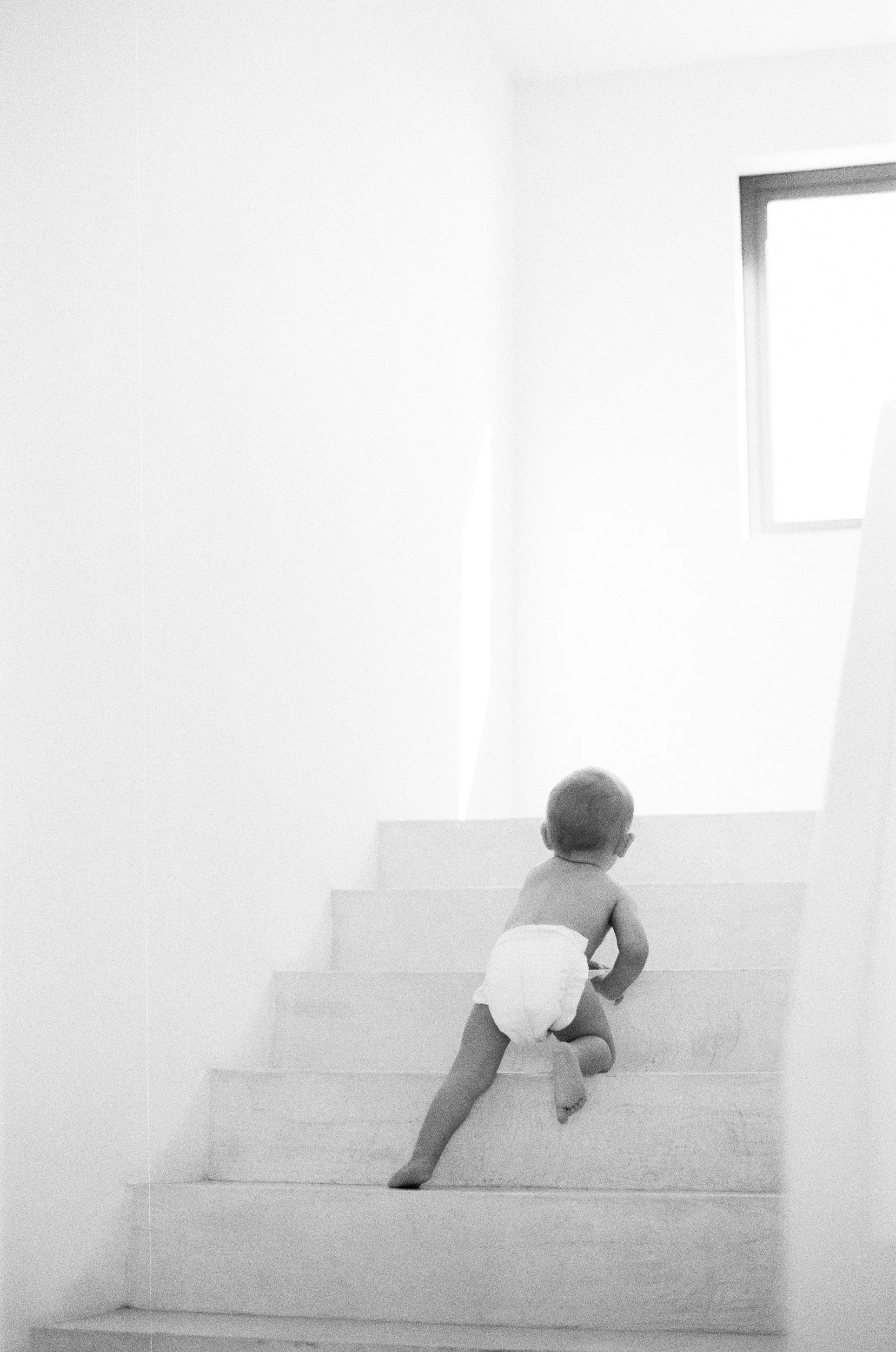
Why Crawling Plays Such a Critical Role in Development
Crawling isn’t just a cute phase - it’s one of the most neurologically important stages of early development.
During crawling, babies move in a cross-patterned motion (right arm with left leg, and vice versa). This seemingly simple movement is actually doing something extraordinary inside the brain:
Connecting the left and right hemispheres
Strengthening neural pathways across the corpus callosum
Building the foundation for coordination, learning, and emotional regulation
In our clinic at Nomad Chiropractic Mosman, we often explain to parents that crawling is one of the first times the brain and body truly start working together in a coordinated, integrated way.
It’s not just movement—it’s brain wiring in action.
How Crawling Supports Strength, Coordination, Vision & Reflex Integration
Crawling is a full-body neurological workout. It lays down multiple layers of development simultaneously.
1. Strength & Stability
Crawling builds:
Shoulder stability
Core strength
Hip control
These are essential for:
Walking
Running
Posture
Sitting still at school
Without this foundation, we often see compensation patterns later—like slouching, fidgeting, or poor endurance in seated positions.
2. Coordination & Motor Planning
Cross-pattern crawling develops:
Bilateral coordination (using both sides of the body together)
Motor planning (the brain’s ability to organise movement)
This translates into:
Sports performance
Handwriting
Climbing, jumping, and balance
Kids who skipped crawling may later present with:
Clumsiness
Difficulty with coordination-based tasks
Avoidance of physical activity
3. Visual Development
Crawling plays a huge role in:
Depth perception
Eye tracking
Hand-eye coordination
As babies crawl, they constantly shift their gaze between near and far objects. This strengthens the visual system in ways that are essential for:
Reading
Focus
Attention in the classroom
4. Primitive Reflex Integration
This is one of the biggest (and most overlooked) benefits.
Crawling helps integrate primitive reflexes such as:
When these reflexes are retained, we often see:
Learning difficulties
Emotional dysregulation
Sensory challenges
At Nomad, this is a big part of what we assess—because retained reflexes often sit underneath many common childhood concerns.
🌸 Learn more about Retained Primitive Reflexes here
“But My Baby Didn’t Crawl… and They’re Fine?”
This is something we hear all the time—and it’s an important conversation.
It’s true that some children:
Bottom shuffle
Walk early
Skip crawling altogether
And early on, everything can seem completely fine.
But what we often see clinically is that the impact shows up later, not immediately.
Potential Later Signs of Missed Crawling
Poor coordination or “clumsiness”
Difficulty sitting still
Struggles with handwriting or reading
Reduced core strength and posture
Emotional regulation challenges
Learning or attention difficulties
This doesn’t mean something is “wrong”—it just means that a foundational stage may not have been fully integrated.
The good news? The nervous system is incredibly adaptable.
And this is where targeted movement (and chiropractic care) can make a huge difference.
Simple Ways to Encourage Crawling (At Any Age)
Whether you have a baby, toddler, school-aged child—or even you as an adult—there are ways to build or rebuild these patterns.
👶 For Babies
Increase tummy time (multiple short sessions daily)
Place toys just out of reach
Use mirrors to encourage movement
Get down on the floor and model crawling
→ Click here for some home exercise videos
🧒 For Toddlers & Kids
Create obstacle courses (pillows, tunnels, cushions)
Encourage crawling games:
“Army crawl under tables”
Limit excessive time in walkers or containers
Make it playful—not forced.
→ Click here for some home exercise videos
🧑 For Older Kids & Adults
This is where it gets really interesting.
Reintroducing crawling patterns can:
Improve coordination
Support posture
Help with nervous system regulation
Try:
Cross-crawl exercises
Slow, controlled crawling patterns
We often incorporate these into care plans at Nomad, especially when working with:
Chronic tension patterns
How Chiropractic Care Supports Crawling & Development
At Nomad Chiropractic Mosman, our approach is gentle, neurologically focused, and tailored to each individual.
We assess:
Movement patterns
Spinal alignment
Nervous system function
Primitive reflexes
Chiropractic care can help by:
Supporting optimal brain-body communication
Improving movement efficiency
Reducing compensatory patterns
Creating the environment for development to unfold
For babies, this often means:
More comfortable tummy time
Improved feeding and settling
Easier movement transitions
For older kids and adults:
Better coordination
Improved posture
Enhanced regulation
We don’t “force” milestones—we support the body so it can achieve them naturally.
The Bigger Picture: Development is Not a Race
In today’s world, there’s often a rush to hit milestones early.
But development isn’t about speed—it’s about quality and integration.
Crawling is not something to skip over.
It’s something to honour.
Because it lays the groundwork for:
Learning
Movement
Emotional regulation
Long-term health
You can also explore our blogs on:
Postpartum Care Matters Too
Something we’re deeply passionate about at Nomad is supporting the mother after birth — not just the baby.
The postpartum period places enormous stress on:
The nervous system
Feeding posture
Sleep patterns
Pelvic recovery
Our Postpartum Chiropractic Care page explains how caring for the mother’s nervous system often positively impacts the baby too.
Because babies regulate through connection.
And supported mothers regulate more easily.
🌼 Learn more here
One of the things I see regularly in practice is that parents often don't realise how important crawling is until much later. A child might have walked early, hit most of their milestones, and seem to be doing perfectly well. Then a few years down the track, they're struggling with coordination, sitting still in the classroom, handwriting, balance, or confidence in sport. Of course, not every challenge comes back to crawling, but it's remarkable how often we find a history of skipped or limited crawling alongside retained primitive reflexes and developmental delays in other areas. It's one of the reasons I pay so much attention to movement milestones. They're not simply boxes to tick on a developmental checklist - they give us valuable clues about how a child's nervous system has developed and whether there may be opportunities to provide extra support. The wonderful thing is that the brain is incredibly adaptable, and with the right movements, activities, and support, it's never too late to strengthen these foundations.
At Nomad, we often say that development is a journey, not a race, and every child deserves the opportunity to build strong neurological foundations for life.
We look forward to supporting you and your family soon.
If you’ve ever wondered whether your child’s development is on track - or if something feels “not quite right” - you’re not alone.
At Nomad Chiropractic Mosman, we take a gentle, whole-body approach to development, helping support your child’s nervous system from the ground up.
Learn more about how we work:
Frequently Asked Questions about our Chiropractic Care for Crawling
1. What age should babies start crawling?
Most babies begin crawling between 6–10 months, but there is a range. What matters most is not the exact timing - but that the movement pattern develops in a coordinated way.
2. Is bottom shuffling instead of crawling a concern?
Bottom shuffling can be a variation of movement, but it doesn’t provide the same cross-pattern neurological benefits as crawling. It may be worth assessing movement patterns and reflex integration.
3. Can you teach a baby to crawl if they’re not doing it naturally?
Yes through play-based encouragement, environment setup, and supporting underlying movement restrictions. Gentle guidance is key, not forcing the milestone.
4. Is it too late if my child skipped crawling?
Not at all. The nervous system remains adaptable. Crawling patterns can be reintroduced at any age to support coordination, learning, and regulation.
5. How do I know if my child has retained primitive reflexes?
Signs may include poor coordination, posture issues, learning difficulties, or emotional dysregulation. A neurological assessment (like we offer at Nomad Chiropractic Mosman) can help identify this.
-
⚠️ Disclaimer:
This information is educational only and is not intended to replace individual medical advice. Chiropractors do not claim to “treat” medical conditions in infants. If you have concerns about your baby’s health or development, please consult your GP, paediatrician, or other qualified health professional. -
Blythe, S. (2005). The Well Balanced Child: Movement and Early Learning
Goddard Blythe, S. (2011). Reflexes, Learning and Behavior
Melillo, R. (2015). Disconnected Kids
Hadders-Algra, M. (2005). Development of postural control during the first 18 months of life
Adolph, K. E., & Berger, S. E. (2006). Motor development
Iverson, J. M. (2010). Developing language in a developing body
Thelen, E. (2000). Motor development as foundation for cognition
Australian Spinal Research Foundation (ASRF)
International Chiropractic Pediatric Association (ICPA)
Haavik, H. (2014). The Reality Check
Want to learn more? Book a FREE 15min discovery call with one of our Sydney Paediatric Chiropractors today: Book HERE
Gentle, Evidence-Informed Chiropractic Care for Babies in Mosman
Crawling is a foundational developmental stage that supports strength, coordination, visual processing, and primitive reflex integration. While some children skip crawling, this can impact learning, posture, and regulation later in life. Encouraging crawling at any age, alongside neurologically focused chiropractic care, can help restore these essential movement patterns and support long-term brain and body development.