Guppy - Baby Neck Stretch
Baby Chiro Homecare Edition
What’s the “Guppy” Neck Stretch?
The "guppy" stretch is a technique to improve neck and tongue mobility in infants, particularly those with breastfeeding or oral function issues. It might helps promote neck extension and motor development.
Disclaimer: this advice is general only and isn't specific to you and your child's needs unless you are a client of ours and we have specifically prescribed this home-care. It's intended for educational purposes only. If you have any concerns please check in with us (if you’re a client) or with your local health practitioner if you’re not.
Also note that Kristin is using a doll and over exaggerating the movement in order for you to see what she’s doing. Please be gentle with your baby.
Watch: How to Do the Guppy Stretch – 4 Positions
Not sure what you’re actually trying to achieve with the Guppy Stretch? In this video, Dr Lucy Bartlett demonstrates the movement on herself first, so you can understand what the stretch should feel like before trying it with your baby.
She explains how gently opening through the chest, shoulders and front of the neck can help you get the positioning right - without forcing your baby’s head or neck.
You’ll then see four ways to try the Guppy Stretch with your baby: over your leg, using a pull-to-sit movement, supported through the upper back, and using a physio ball.
The goal is simple: to create a gentle, comfortable stretch through the front of the neck and upper body while following your baby’s cues.
“Guppy” - Baby Neck Stretch
How to Do the Guppy Stretch With Your Baby
There are several ways to do the Guppy Stretch. The aim is the same with each option: to gently encourage your baby to extend through their upper body and neck, creating a comfortable stretch through the front of the neck and chest.
Movements should always be slow and gentle. Follow your baby’s cues and never force their head or neck into position.
Option 1: Over Your Legs
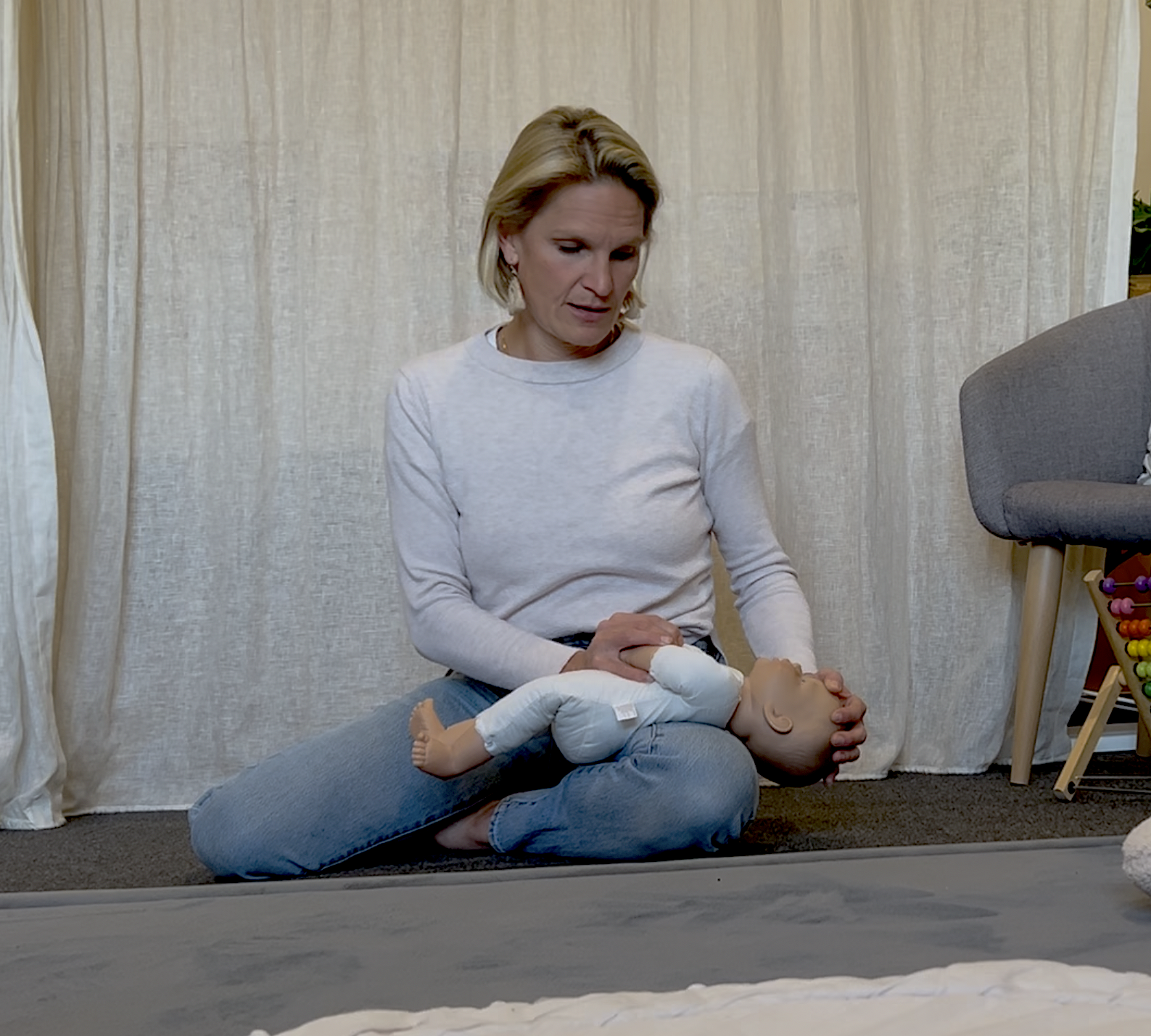
Sit comfortably with your baby lying across your legs. Support their body securely and position them so their head can gently extend beyond the edge of your leg.
Allow gravity to encourage a gentle stretch through the front of the neck and upper body.
Keep one hand securely supporting your baby and the other ready to support their head whenever needed.
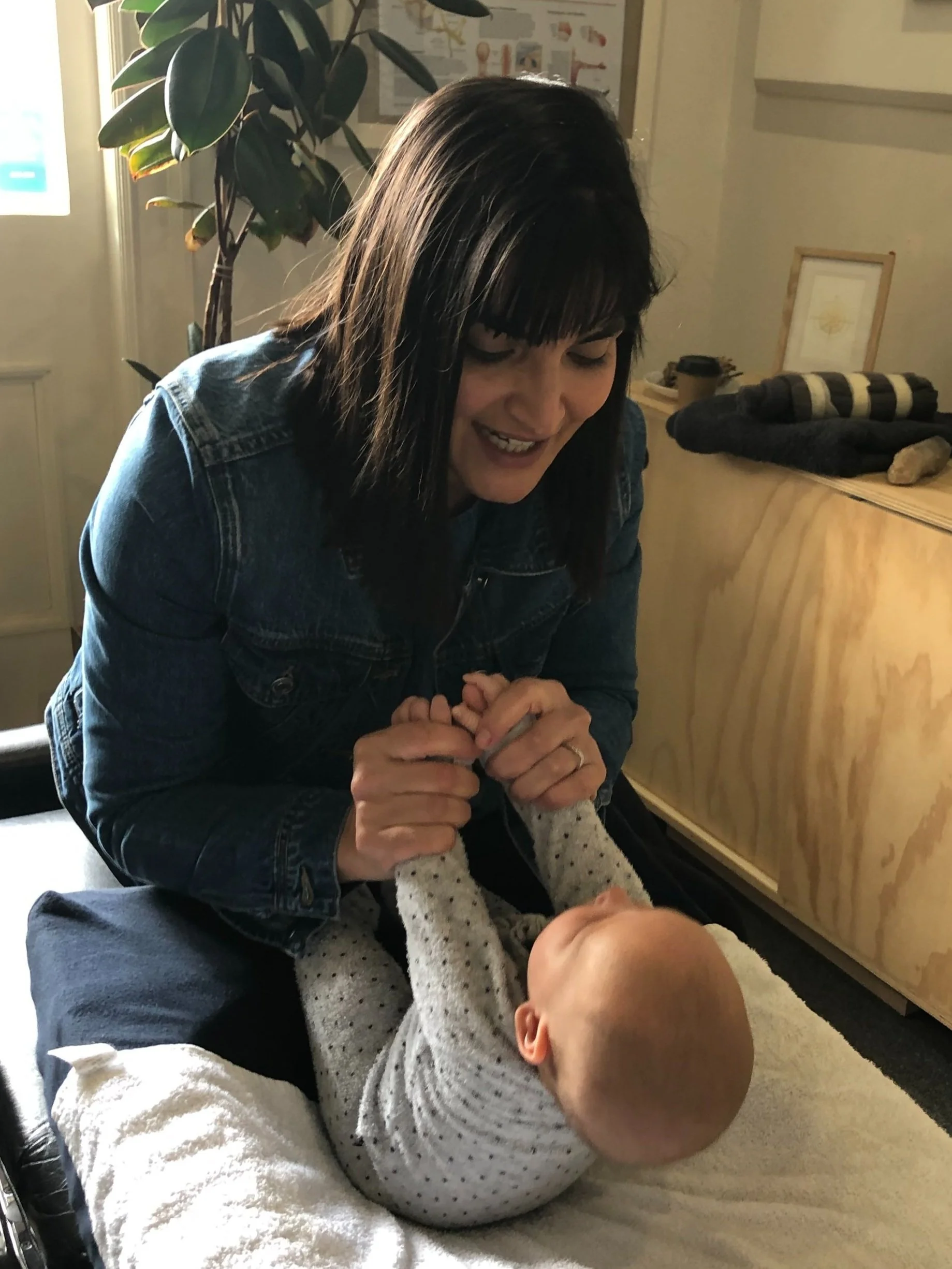
Option 2: Pull to Sit
With your baby lying on their back, hold securely around both forearms or wrists without pulling through the wrist joint.
Slowly begin a gentle pull-to-sit movement. As you lift, allow your baby’s head to remain slightly behind their body for a brief, comfortable stretch.
Move slowly and smoothly, then gently lower your baby back down.
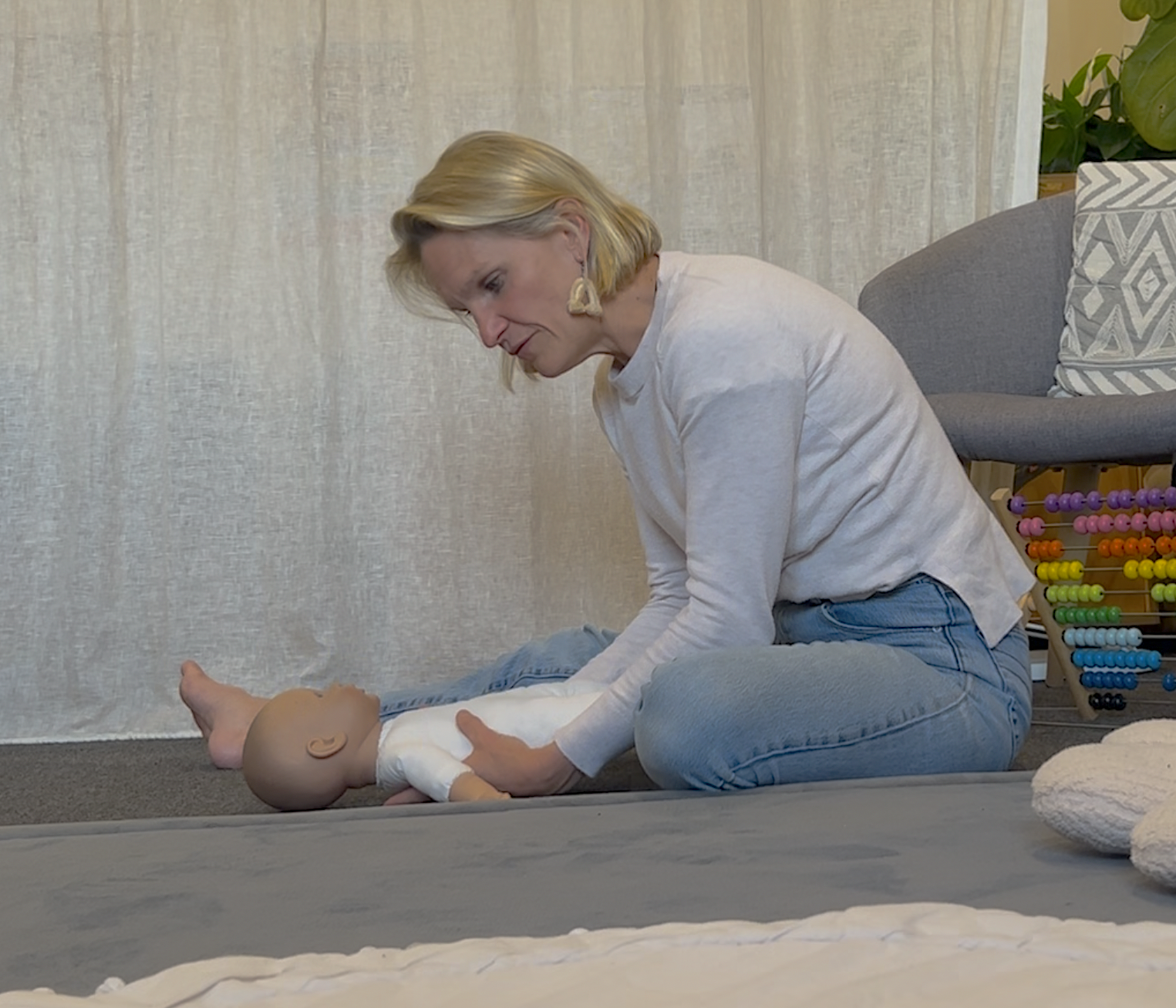
Option 3: Supported Upper-Back Lift
With your baby relaxed on their back, slide your fingertips underneath their upper back, either side of the spine.
Gently lift through the upper back, allowing the chest to open and the head and neck to naturally move into a small amount of extension.
You can also gently turn your baby’s head to one side and repeat, then try the other side if comfortable.
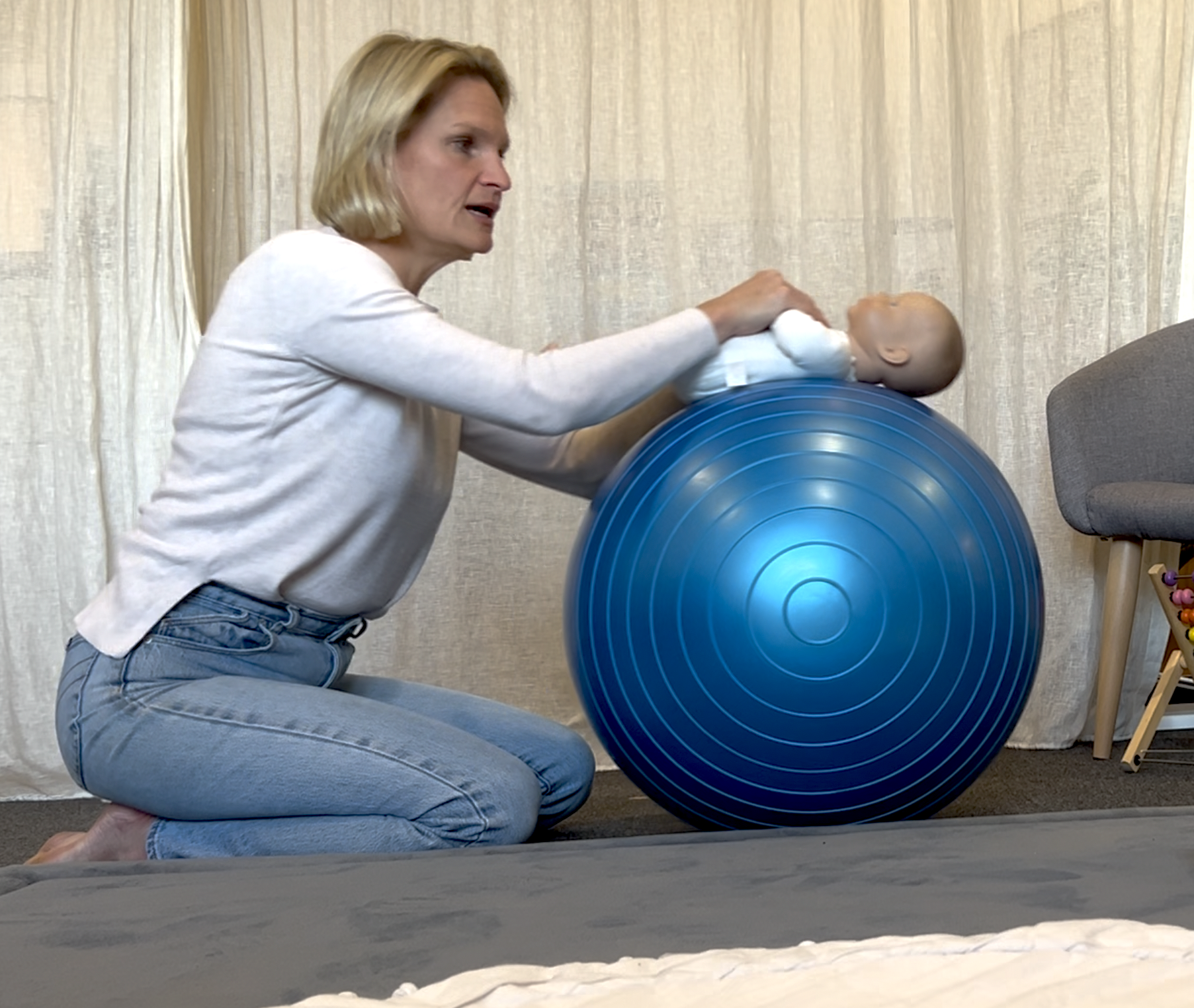
Option 4: Using a Physio Ball
Place your baby securely on their back over a physio ball, keeping your hands on them at all times.
Gently adjust their position on the ball to encourage a comfortable opening through the chest, upper body and front of the neck.
The curved surface of the ball allows you to gradually control how much extension is introduced.
Which Guppy Stretch Position Should You Use?
There isn’t one “perfect” way to do the Guppy Stretch. Some babies are more comfortable with one position than another, and this can change as they grow.
Start with the position that feels easiest and most comfortable for your baby. The goal is gentle, relaxed movement - not achieving the biggest stretch possible.
If your baby becomes upset, strongly resists the position or appears uncomfortable, stop and try again another time or speak with your healthcare practitioner.
Frequently Asked Questions about the Guppy Neck Stretch for Babies
Which babies benefit & when is it safe to try?
Babies with neck tension, a head tilt, or difficulty breastfeeding will benefit most. All babies can benefit from this stretch as it helps them move out of the fetal position, promoting strength, posture, and motor development. Start from Day 1 if you’re comfortable, but now is a great time too!
How long to hold the stretch?
Start with a few seconds and increase as your baby becomes more comfortable. Aim for 2-3 minutes if they’re relaxed, but stop if they’re tense or uncomfortable.
Reverse Tummy Time
The guppy stretch is a form of “reverse tummy time,” helping open the neck by tilting the head back. Pair it with tummy time to stretch (guppy) and strengthen (tummy time) in one routine.
A deeper stretch with feeding benefits
Encourage the baby to stick out their tongue as you extend their head. This engages the tongue, deepening the stretch and helping improve breastfeeding or bottle feeding by supporting tongue mobility.
Most importantly…
Be gentle and listen to your baby’s cues. If you’re ever unsure, consult a paediatric chiro or osteo or your child’s healthcare provider for guidance.
If you are a client of ours and need some clarification or help simply SMS us on 0491 064 117. Or ask us next time you’re in.
If you’re not a client but you’ve stumbled across this page we highly recommend booking in with your local paediatric chiropractor for an assessment before beginning these exercises. Book online with us here
-
The Guppy Stretch is a commonly used home exercise intended to encourage gentle neck and upper-body mobility in babies. Research specifically investigating the “Guppy Stretch” as a standalone technique is limited. The following resources provide further information on infant neck mobility, stretching, positioning, torticollis and related home-care approaches.
Sargent B, Coulter C, Cannoy J, Kaplan SL. Physical Therapy Management of Congenital Muscular Torticollis: A 2024 Evidence-Based Clinical Practice Guideline From the American Physical Therapy Association Academy of Pediatric Physical Therapy. Pediatric Physical Therapy. 2024;36(4):370–421. doi:10.1097/PEP.0000000000001114.
Kaplan SL, Coulter C, Sargent B. Physical Therapy Management of Congenital Muscular Torticollis: A 2018 Evidence-Based Clinical Practice Guideline From the American Physical Therapy Association Academy of Pediatric Physical Therapy. Pediatric Physical Therapy. The guideline discusses infant neck range of motion, stretching, positioning, strengthening and caregiver-delivered home exercises.
Royal Children’s Hospital Melbourne. Clinical Practice Guideline: Congenital Torticollis. Guidance includes caregiver education, positioning and passive stretching exercises for appropriate cases of congenital muscular torticollis.
American Academy of Pediatrics. Prevention and Management of Positional Skull Deformities in Infants. Pediatrics. Guidance discusses assessment of neck movement, supervised tummy time, positioning and neck-motion exercises where torticollis is present.
-
The information and exercises on this page are provided for general educational purposes only and are not intended to diagnose, treat or replace individual medical or healthcare advice.
Every baby is different, and the Guppy Stretch may not be appropriate for every infant. The movement should always be gentle and comfortable and should never be forced. Stop if your baby becomes distressed, strongly resists the movement, appears uncomfortable, or if you have any concerns about their response.
If your baby has persistent head-turning preference, restricted neck movement, unusual head or neck positioning, feeding difficulties, developmental concerns, or you are unsure whether this exercise is appropriate, seek assessment from an appropriately qualified healthcare professional.
If your baby is a patient at Nomad Chiropractic, follow the specific home-care instructions provided by your chiropractor rather than relying on this general guide.
Safe sleep: These positions are exercises for an awake, supervised baby only. They are not sleeping positions. Always follow current safe-sleep recommendations for your baby.
Want to learn more? Book a FREE 15min discovery call with one of our Mosman, Sydney Baby Chiropractors today: Book HERE