
Why Balance Is the Foundation for Learning, Movement and Confidence
Developing the Vestibular System in Babies and Toddlers
What is the vestibular system?
The vestibular system is your child's balance and movement system. Located inside the inner ear, it constantly tells the brain where the head is in space, helping with balance, posture, coordination, vision, muscle tone, emotional regulation and motor development.
Why does the vestibular system matter?
A well-developed vestibular system supports crawling, walking, climbing, reading, attention, confidence, sport, and even emotional regulation.
How can parents help?
Encourage tummy time from birth
Let babies crawl instead of rushing walking
Swing, spin and rock in moderation
Climb, roll and balance daily
Play outdoors on uneven surfaces
Reduce excessive time in containers such as swings and bouncers
At Nomad Chiropractic, we frequently assess movement patterns, primitive reflexes, posture and development because these all work together to support a healthy developing nervous system.
Developing the Vestibular System in Babies and Toddlers
As parents, we often celebrate the big milestones.
The first smile. Rolling. Crawling. Walking. Running.
But underneath every one of these milestones is an incredible system that many parents have never heard of—the vestibular system.
It's one of the very first sensory systems to develop, and it quietly influences almost everything your child will ever learn to do.
From learning to sit upright... to reading at school... to riding a bike... to catching a ball... the vestibular system is working behind the scenes every second of every day.
At Nomad Chiropractic in Mosman, one of the most common things we assess isn't simply whether a child has reached a milestone—but how they achieved it. The quality of movement often tells us much more than the milestone itself.
Let's explore why this remarkable system deserves far more attention.
What Is the Vestibular System?
The vestibular system is located inside the inner ear.
Tiny fluid-filled canals and sensory organs detect:
movement
acceleration
gravity
head position
changes in direction
Every time your baby's head moves—even slightly—the vestibular system immediately sends information to the brain.
The brain combines this information with:
vision
touch
muscle feedback (proprioception)
Together these systems tell your child:
"Where am I in space?"
This allows the body to remain balanced without needing to consciously think about it.
Why Is the Vestibular System So Important?
Think of it as the body's internal GPS.
Without accurate vestibular input, the brain struggles to organise movement efficiently.
A healthy vestibular system contributes to:
balance
posture
coordination
muscle tone
eye tracking
crossing the midline
spatial awareness
confidence with movement
emotional regulation
body awareness
attention
motor planning
It becomes the foundation for virtually every physical skill your child develops.
Development Starts Before Birth
Many parents are surprised to learn that vestibular development begins during pregnancy.
As your baby moves inside the womb, every kick, roll and somersault stimulates the developing balance organs.
Even mum's daily walking provides gentle rhythmic vestibular stimulation.
This early movement helps establish important brain pathways before birth.
Once babies arrive, development accelerates dramatically through movement.
Movement Builds the Brain
Babies are designed to move.
Every wiggle provides information.
Every roll teaches balance.
Every crawl builds brain connections.
Movement isn't simply exercise.
It is how the developing nervous system learns.
When babies repeatedly experience different positions—lying, rolling, sitting, crawling, climbing and eventually walking—the vestibular system becomes increasingly sophisticated.
This is one reason modern developmental research encourages active floor play over prolonged time in restrictive equipment.
Why Tummy Time Matters
Tummy time is often recommended to strengthen neck muscles.
While that's certainly true, it does far more.
During tummy time babies:
lift their head against gravity
strengthen postural muscles
stimulate vestibular pathways
improve shoulder stability
develop visual tracking
prepare for rolling
prepare for crawling
Gravity becomes one of the vestibular system's greatest teachers.
Aim for frequent short sessions throughout the day rather than one long period.
Crawling: One of Nature's Greatest Brain Exercises
If we could choose one activity that develops the vestibular system, crawling would sit near the top.
During crawling your baby must constantly:
shift weight
stabilise the head
coordinate opposite arms and legs
track visually
maintain balance
cross the midline
process movement
This repeated pattern provides enormous amounts of vestibular input.
It also integrates primitive reflexes while strengthening postural control.
This is one reason we encourage families not to rush walking if their baby is happily crawling.
The longer a baby enjoys varied crawling experiences, the richer their neurological development often becomes.
Why Different Types of Movement Matter
The vestibular system doesn't just enjoy one type of movement.
It benefits from many.
These include:
Linear movement
Forward and backward.
Examples:
rocking
crawling
walking
swinging
Rotational movement
Turning around.
Examples:
spinning
rolling
somersaults
gentle dancing
Vertical movement
Up and down.
Examples:
bouncing
climbing
jumping
stepping
Changes in head position
Looking:
up
down
sideways
upside down
Each type stimulates slightly different parts of the vestibular system.
Variety is the key.
The Connection Between Vision and Balance
Did you know the vestibular system directly controls eye movements?
A special reflex called the vestibulo-ocular reflex (VOR) keeps vision stable while the head moves.
Without it:
reading becomes harder
tracking words may be difficult
catching balls becomes challenging
copying from a whiteboard is slower
dizziness may occur
This explains why movement and vision are so closely linked throughout childhood.
Vestibular Development and Muscle Tone
One of the most overlooked roles of the vestibular system is regulating muscle tone.
Tone is the amount of background muscle activity present even when we're resting.
Healthy vestibular input helps muscles know:
how much effort to use
when to activate
when to relax
Children with immature vestibular processing may appear:
floppy
stiff
clumsy
constantly slouched
always leaning
avoiding movement
Muscle tone isn't simply about strength—it reflects how efficiently the nervous system organises movement.
Confidence Comes From Competence
Children naturally repeat activities they feel successful doing.
A strong vestibular system allows children to:
climb confidently
explore playgrounds
balance on logs
ride bikes
jump
run
Every success builds confidence.
Children who constantly feel unstable often avoid movement, creating fewer opportunities to improve.
Supporting movement early helps create positive experiences that encourage lifelong physical activity.
Signs Your Child May Need More Vestibular Experiences
Every child develops differently.
However, some children may benefit from additional movement opportunities if they:
dislike tummy time
skipped crawling
avoid climbing
become frightened by swings
tire quickly
appear clumsy
fall often
seek constant movement
spin excessively
dislike uneven ground
struggle with balance
become overwhelmed by busy environments
These signs don't necessarily indicate a problem, but they can provide valuable clues about how your child's nervous system processes movement.
Simple Ways to Support Vestibular Development at Home
The wonderful news is that children's brains love natural movement.
Many of the best vestibular activities don't require expensive equipment.
Floor Time
The floor remains one of the best developmental environments.
Allow babies plenty of supervised time exploring different positions.
Crawling Obstacle Courses
Use:
cushions
pillows
foam mats
tunnels
folded blankets
Changing surfaces encourages problem-solving while stimulating balance.
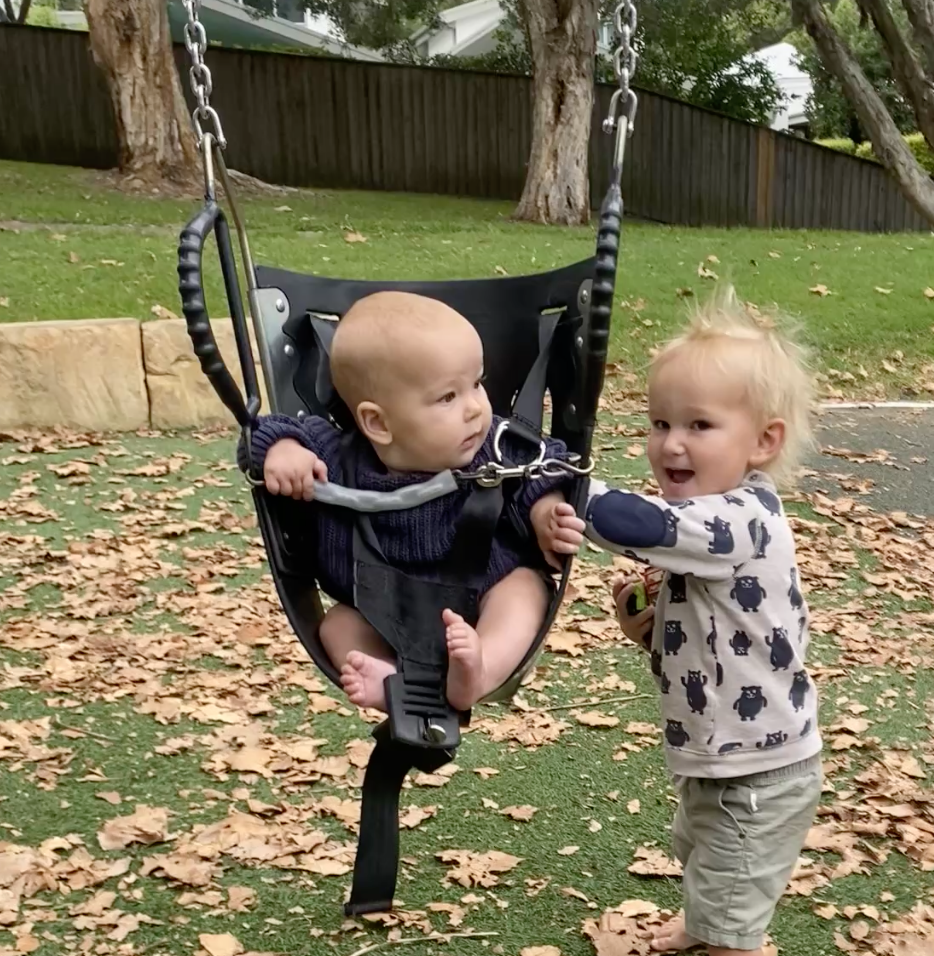
Swings
Swinging provides gentle linear vestibular input.
Different positions can create different sensory experiences.
Always supervise carefully and begin slowly.
Rolling Games
Roll:
across soft mats
down gentle grassy slopes
inside tunnels
Rolling stimulates rotational vestibular pathways while being lots of fun.
Climbing
Safe climbing develops:
balance
confidence
strength
coordination
Playgrounds are wonderful teachers.
Dancing
Music naturally encourages:
spinning
turning
jumping
rhythm
Children often instinctively give themselves the movement their brains need.
Walking Outdoors
Nature provides constantly changing terrain.
Walking across:
grass
sand
rocks
hills
challenges the vestibular system far more than flat indoor flooring.
What About Baby Containers?
If i wasn’d afraid to hurt your feelings… i’d tell you… “I hate them. If you’ve got a bumbo seat or a jolly jumper… do your future self a favour and throw it out.”
Modern parenting offers many helpful devices: Prams, swings, bouncers, rockers, activity centres.
These certainly have their place. However, they shouldn't replace active floor time.
Babies learn through self-generated movement. The more opportunities they have to move freely, the richer the sensory information reaching the developing brain.
Aim for a healthy balance throughout the day.
What We Often See in Practice
One of the most rewarding parts of working with babies and young children is watching confidence grow alongside movement.
Sometimes parents come in worried because their child seems "behind."
Other times they simply notice their toddler avoids climbing or becomes upset on swings while their friends happily play.
Often it's not about teaching a new skill—it's about giving the nervous system the right opportunities to organise itself.
When movement becomes easier, many children naturally become more adventurous, more coordinated and more confident.
Every child develops at their own pace, but supporting the quality of movement during these early years can make a remarkable difference over time.
How Chiropractic May Help
At Nomad Chiropractic, our focus extends well beyond simply looking at joints.
During developmental assessments we may observe:
posture
head control
crawling patterns
balance
muscle tone
primitive reflexes
symmetry
movement quality
Where appropriate, gentle chiropractic care aims to support healthy nervous system function while working alongside your child's broader healthcare team.
We also spend plenty of time educating parents about practical activities they can confidently do at home to encourage movement and development.
No single therapy replaces active play—and movement remains one of the greatest gifts you can give a developing brain.
The Vestibular System Takeaway
The vestibular system is far more than balance.
It influences how babies move, see, learn, explore, regulate emotions and interact with the world.
Fortunately, supporting it doesn't require complicated exercises.
It simply requires opportunities to move.
Roll.
Crawl.
Climb.
Swing.
Dance.
Play.
These simple childhood experiences are doing far more than creating happy memories—they are helping build the architecture of the developing brain.
At Nomad Chiropractic, we're passionate about helping families understand these important foundations so children can move confidently, learn efficiently and thrive through every stage of development.
Learn more about how we work:
Frequently Asked Questions about the Vestibular System
1. At what age does the vestibular system begin developing?
The vestibular system begins developing very early during pregnancy and is functional before birth. Babies receive vestibular stimulation every time they move in the womb or when mum walks. After birth, tummy time, rolling, crawling, climbing and walking continue to strengthen these pathways throughout infancy and early childhood.
2. Can too much time in swings or baby containers affect development?
Swings, prams, bouncers and rockers can all be useful tools, but they shouldn't replace active floor play. Babies learn best through self-initiated movement. Long periods spent in containers may reduce opportunities to strengthen muscles, develop balance and practise important developmental skills like rolling and crawling.
3. My baby skipped crawling. Should I be worried?
The short answer is yes but no - you’re on this page and help is at hand. Many babies who skip crawling go on to develop normally. However, crawling provides valuable opportunities for vestibular development, bilateral coordination, primitive reflex integration, shoulder stability and visual development. If your child skipped crawling or used an unusual crawling pattern, it may be worthwhile discussing their development with a healthcare professional experienced in paediatric motor development.
4. What are the best activities for toddlers to develop balance?
Simple everyday play is often the best. Encourage climbing at playgrounds, walking on uneven grass, balancing on logs, dancing, rolling down grassy hills, playing on swings, obstacle courses made from cushions, and plenty of outdoor exploration. Variety helps challenge the vestibular system in different ways.
5. How do chiropractors assess vestibular development?
At Nomad Chiropractic, we look at the whole child. Depending on age, this may include observing posture, head control, rolling, crawling, walking, balance, coordination, muscle tone, symmetry, primitive reflexes and developmental milestones. These observations help us understand how your child's nervous system is organising movement so we can provide individualised guidance and appropriate care.
-
⚠️ Disclaimer:
This information is educational only and is not intended to replace individual medical advice. Chiropractors do not claim to “treat” medical conditions in infants. If you have concerns about your baby’s health or development, please consult your GP, paediatrician, or other qualified health professional. -
American Academy of Pediatrics. Motor Delays: Early Identification and Evaluation.
American Academy of Pediatrics. Back to Sleep, Tummy to Play.
Ayres AJ. Sensory Integration and the Child.
Blair E, et al. Motor development and childhood function.
Brown T, Lalor A. The movement basis of learning.
Campos JJ, Anderson DI, Barbu-Roth MA, Hubbard EM, Hertenstein MJ, Witherington D. Travel broadens the mind.
Gottlieb GL. Motor development and sensory integration research.
Hadders-Algra M. Early human motor development.
Haavik H. The Reality Check.
Haavik H. The Neurophysiological Effects of Spinal Adjustment.
International Chiropractic Pediatric Association (ICPA). Developmental milestone resources.
National Institutes of Health. Vestibular system development.
OECD Early Childhood Development reports.
Shumway-Cook A, Woollacott MH. Motor Control: Translating Research into Clinical Practice.
Spinal Research Australia. Neurological function and chiropractic research.
The Royal Children's Hospital Melbourne. Child development resources.
World Health Organization. Guidelines on Physical Activity, Sedentary Behaviour and Sleep for Children Under 5 Years of Age.
Zero to Three. Early childhood movement and development resources.
If you're concerned about your baby's balance or vestibular syste, we'd love to help assess their movement, development, primitive reflexes, tone… get in touch!
Want to learn more? Book a FREE 15min discovery call with one of our Mosman, Sydney Baby Chiropractors today: Book HERE
Gentle, Evidence-Informed Chiropractic Care for Babies in Mosman
Healthy vestibular development is built through movement - not gadgets. Daily opportunities for tummy time, crawling, climbing, swinging, rolling, balancing and outdoor play help strengthen the brain's balance system. This supports posture, coordination, vision, muscle tone, emotional regulation and learning. If you have concerns about your child's movement or development, early assessment and guidance can help identify simple ways to encourage healthy neurological development.