
Lower Limb Pinched Nerves: Understanding Sciatica, Femoral Nerve Pain, Meralgia Paresthetica and Leg Numbness
QUICK Links:
Posture | Acute Lower Back Pain
Lower back pain | Sciatica
Neck pain | Headaches
Pain shooting down your leg. Tingling in your foot. Burning on the outside of your thigh. Numb toes. Weakness climbing stairs. These symptoms are often blamed on "sciatica," but several different nerves can create very similar sensations.
In this guide, we explore the most common lower limb nerve conditions including sciatica, femoral nerve irritation, meralgia paresthetica, obturator nerve entrapment, peroneal nerve compression, and tarsal tunnel syndrome. You'll learn how nerves travel from your spine to your feet, why they become irritated, practical home exercises, nerve gliding techniques, PNF stretching, and how chiropractic care may help support healthy nervous system function and movement.
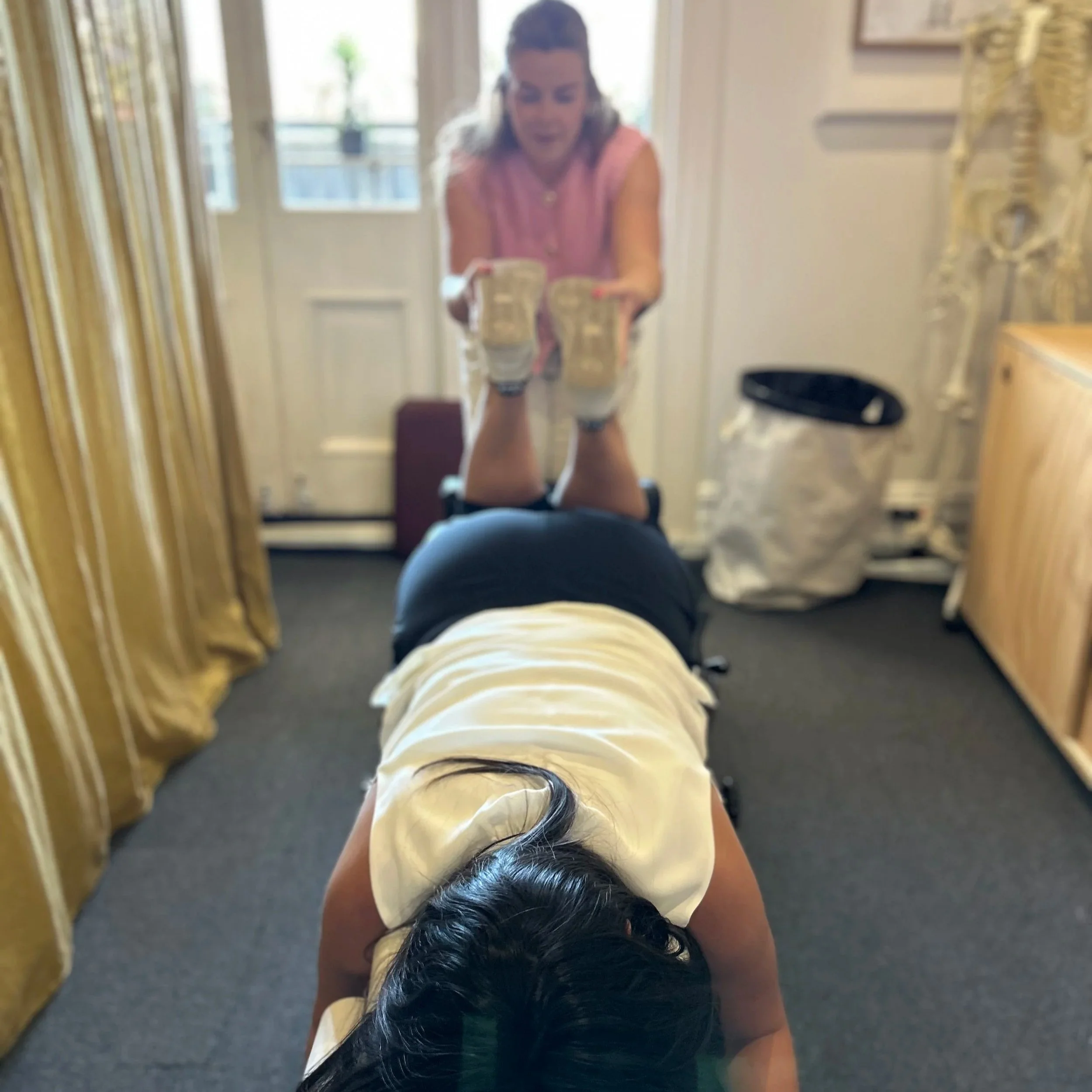
Why Does My Leg Hurt, Tingle, or Go Numb?
One of the most common assumptions people make when they experience leg pain is:
"I must have sciatica."
Sometimes they're right.
But many different nerves can create symptoms in the buttock, hip, thigh, calf, ankle, or foot.
In fact, some lower limb nerve conditions are frequently misdiagnosed as:
Tight hamstrings
Hip bursitis
Piriformis syndrome
ITB syndrome
Plantar fasciitis
Knee pain
General "tightness"
At Nomad Chiropractic, we often see people searching for:
Why do I have shooting pain down my leg?
What causes numbness in my foot?
Why does my outer thigh burn?
Can a chiropractor help sciatica?
What is the best stretch for a trapped nerve?
Why do my toes feel numb?
How do I know if I have a pinched nerve in my lower back?
Let's explore the most common causes.
Understanding Lower Limb Nerves
All major nerves supplying the lower limb begin in the lumbar spine and sacrum.
These nerves leave the spinal cord, combine into networks called plexuses, and then travel through the pelvis and down the legs.
Major nerves include:
Femoral nerve
Obturator nerve
Lateral femoral cutaneous nerve
Common peroneal nerve
Tibial nerve
Each nerve supplies specific muscles, skin regions, and movement patterns.
Because these nerves travel long distances, symptoms often occur far away from the original source of irritation.
The Sciatic Nerve
The sciatic nerve is the largest nerve in the human body.
It originates from nerve roots:
L4
L5
S1
S2
S3
It travels through the pelvis, beneath (or occasionally through) the piriformis muscle, down the back of the leg, and eventually branches into the tibial and common peroneal nerves.
Common Symptoms of Sciatica
Buttock pain
Hamstring pain
Calf pain
Burning leg pain
Tingling
Numbness
Foot symptoms
Difficulty sitting
Many people describe sciatica as:
"An electric shock down my leg."
Common Causes of Sciatica
Lumbar Disc Herniation
A bulging or herniated disc may irritate a nerve root before it becomes the sciatic nerve.
Spinal Stenosis
Narrowing around nerve roots can contribute to symptoms.
Piriformis Syndrome
The sciatic nerve passes close to the piriformis muscle.
Relevant Anatomy
Piriformis
→ Origin: Anterior surface of the sacrum
→ Insertion: Greater trochanter of the femur
A tight or irritated piriformis may contribute to sciatic symptoms in some individuals.
🌼 Learn more about Sciatica here
Femoral Nerve Entrapment
While sciatica receives most of the attention, femoral nerve irritation is surprisingly common.
The femoral nerve arises from:
L2
L3
L4
It supplies:
Front of the thigh
Hip flexors
Quadriceps muscles
Common Symptoms
Front thigh pain
Groin pain
Hip pain
Difficulty climbing stairs
Weakness standing from sitting
Knee instability
Many people mistakenly believe they have a hip problem when the femoral nerve is involved.
Relevant Anatomy
Psoas Major
→ Origin: T12-L5 vertebrae
→ Insertion: Lesser trochanter
Because the femoral nerve travels through the psoas region, tension here may contribute to irritation.
Meralgia Paresthetica
This condition involves irritation of the lateral femoral cutaneous nerve.
Unlike the sciatic and femoral nerves, this nerve is purely sensory.
Symptoms
Burning outer thigh
Tingling outer thigh
Numbness outer thigh
Hypersensitivity to clothing
Many patients describe:
"My thigh feels sunburnt."
Common Causes
Tight belts
Tight jeans
Pregnancy
Weight gain
Prolonged standing
Hip compression
The nerve commonly becomes irritated as it passes beneath the inguinal ligament.
Obturator Nerve Entrapment
The obturator nerve supplies many of the adductor muscles.
It originates from:
L2
L3
L4
Symptoms
Groin pain
Inner thigh pain
Adductor tightness
Reduced athletic performance
Difficulty changing direction
Athletes frequently experience this condition.
Common Peroneal Nerve Compression
The common peroneal nerve wraps around the fibular head near the outside of the knee.
This location makes it particularly vulnerable.
Symptoms
Foot drop
Weak ankle lifting
Outer leg numbness
Tripping
Common causes include:
Crossing legs
Squatting
Knee trauma
Compression during prolonged sitting
Tarsal Tunnel Syndrome
Often described as the "carpal tunnel syndrome of the foot."
The tibial nerve passes through a narrow space near the inside of the ankle.
Symptoms
Burning foot pain
Tingling toes
Numb sole
Symptoms worse at night
Many patients initially assume they have plantar fasciitis.
Why Lower Limb Nerves Become Irritated
Rarely is there one single cause.
Common contributing factors include:
Prolonged Sitting
Particularly common in office workers and commuters.
Reduced Hip Mobility
Limited hip movement often changes loading patterns throughout the lower body.
Core Weakness
Reduced trunk stability may increase stress on surrounding tissues.
Disc Injuries
One of the most common causes of nerve root irritation.
Previous Injuries
Old ankle, knee, hip, or back injuries may alter movement patterns.
Pregnancy and Postpartum Changes
Changes in posture, ligament laxity, abdominal pressure, and pelvic mechanics can influence nerve pathways.
Nerve Flossing for Lower Limb Nerves
Nerve glides may help encourage healthy nerve movement.
The goal is gentle mobility, not aggressive stretching.
Sciatic Nerve Glide
Sit upright.
Straighten one knee.
Pull toes toward you.
Lower chin toward chest.
Return.
Repeat 5-10 times gently.
Femoral Nerve Glide
Lie on your side.
Bend top knee behind you.
Extend neck slightly.
Return slowly.
Repeat gently.
Tibial Nerve Glide
Sit comfortably.
Extend leg.
Pull foot upward and outward.
Return.
Keep movements smooth and comfortable.
PNF Stretching Techniques
PNF may help reduce muscular tension around nerve pathways.
Piriformis PNF Stretch
Cross ankle over opposite knee.
Pull leg toward chest.
Push gently against resistance.
Hold 5 seconds.
Relax and deepen stretch.
Repeat 2-3 times.
Hip Flexor PNF Stretch
Kneeling lunge position.
Gently push forward.
Contract hip flexors.
Hold 5 seconds.
Relax and increase stretch.
Useful when psoas tension contributes to femoral nerve irritation.
Home Care Strategies
Walk Daily
Walking promotes circulation and nervous system movement.
Avoid Long Periods of Sitting
Movement is often medicine.
Improve Hip Mobility
Healthy hips often reduce stress elsewhere.
Strengthen the Glutes
Examples:
Bridges
Clamshells
Step-ups
Improve Sleep Recovery
The nervous system recovers best when well rested.
Can Chiropractic Care Help Lower Limb Nerve Pain?
At Nomad Chiropractic, we assess:
Lumbar spine function
Pelvic mechanics
Hip movement
Nerve pathways
Muscle tension
Movement patterns
Lifestyle contributors
Depending on your presentation, care may include:
Chiropractic adjustments
Soft tissue techniques
Rehabilitation exercises
Nerve glides
Postural advice
Ergonomic recommendations
Our goal is to identify why symptoms developed and help support healthier movement patterns moving forward.
When Should You Seek Immediate Medical Attention?
Seek urgent assessment if you experience:
Progressive leg weakness
Loss of bowel or bladder control
Saddle numbness
Significant balance changes
Rapidly worsening symptoms
Symptoms following significant trauma
These may indicate more serious conditions requiring urgent medical investigation.
Key Takeaways
Not all leg pain is sciatica.
Common lower limb nerve conditions include sciatica, femoral nerve irritation, meralgia paresthetica, obturator nerve entrapment, peroneal nerve compression, and tarsal tunnel syndrome.
Nerves need to move and glide through surrounding tissues.
Nerve flossing and PNF stretching may help improve mobility.
Hip function, spinal health, posture, and movement habits often contribute.
Chiropractic care may help support healthy nervous system function and movement.
Frequently Asked Quesitons - Lower Limb Radiculopathy
1. How do I know if my leg pain is sciatica or something else?
Sciatica typically causes pain, tingling, numbness, or burning that travels from the lower back or buttock down the back of the leg. However, femoral nerve irritation, meralgia paresthetica, hip conditions, and even foot problems can create similar symptoms. A thorough assessment can help determine which nerve or structure is involved.
2. Can a pinched nerve cause foot numbness?
Yes. Several nerves can contribute to foot numbness, including the sciatic nerve, tibial nerve, common peroneal nerve, and nerves exiting the lower back. The location of the numbness often provides clues about which nerve is involved.
3. What is meralgia paresthetica?
Meralgia paresthetica is irritation of the lateral femoral cutaneous nerve, which supplies sensation to the outer thigh. It commonly causes burning, tingling, numbness, or hypersensitivity on the outside of the thigh and is often associated with tight clothing, pregnancy, weight gain, or prolonged standing.
4. Should I stretch if I have sciatica?
Sometimes. Gentle mobility exercises and nerve glides can be helpful, but aggressive stretching may worsen symptoms in some people. The best approach depends on the underlying cause of the sciatic irritation and should be tailored to the individual.
5. Can chiropractic care help with sciatica and nerve pain?
Yes. It’s one of our core skillsets. Many people seek chiropractic care for sciatica, leg pain, numbness, and nerve-related symptoms. Care may include spinal assessment, movement evaluation, soft tissue techniques, rehabilitation exercises, and advice aimed at improving mobility and supporting nervous system function.
If you're experiencing leg pain, tingling, numbness, or nerve-related symptoms and you're not sure where they're coming from, we'd love to help. At Nomad Chiropractic, we take the time to understand the whole picture and create a personalised plan designed around your goals and lifestyle.
Want to learn more? Book a FREE 15min discovery call with one of Sydney’s best Chiropractors today: Book HERE
-
Spinal Research Foundation Australia
Heidi Haavik Research Resources
Chiropractic Australia
Dr Mo Knows
Clinical Neurodynamics
David Butler & The Sensitive Nervous System
Explain Pain
Lorimer Moseley
National Institute of Neurological Disorders and Stroke
Mayo Clinic
-
The information provided on this website is for general educational purposes only and is not intended to replace professional healthcare advice, diagnosis, or treatment. Chiropractic care may assist with musculoskeletal function and nervous system health; however, individual outcomes may vary.
This content does not constitute medical advice and should not be used to diagnose or treat any health condition. Always seek advice from a registered healthcare professional if you have concerns about your symptoms, particularly if symptoms are severe, worsening, or persistent.
If you experience red flag symptoms such as unexplained weight loss, fever, loss of bladder or bowel control, progressive weakness, or significant trauma, seek immediate medical attention.
Nomad Chiropractic practitioners are registered with the Australian Health Practitioner Regulation Agency (AHPRA) and provide care in accordance with Australian healthcare standards and scope of practice.
Sometimes the symptoms show up in your foot, but the answer starts much higher up the chain.